
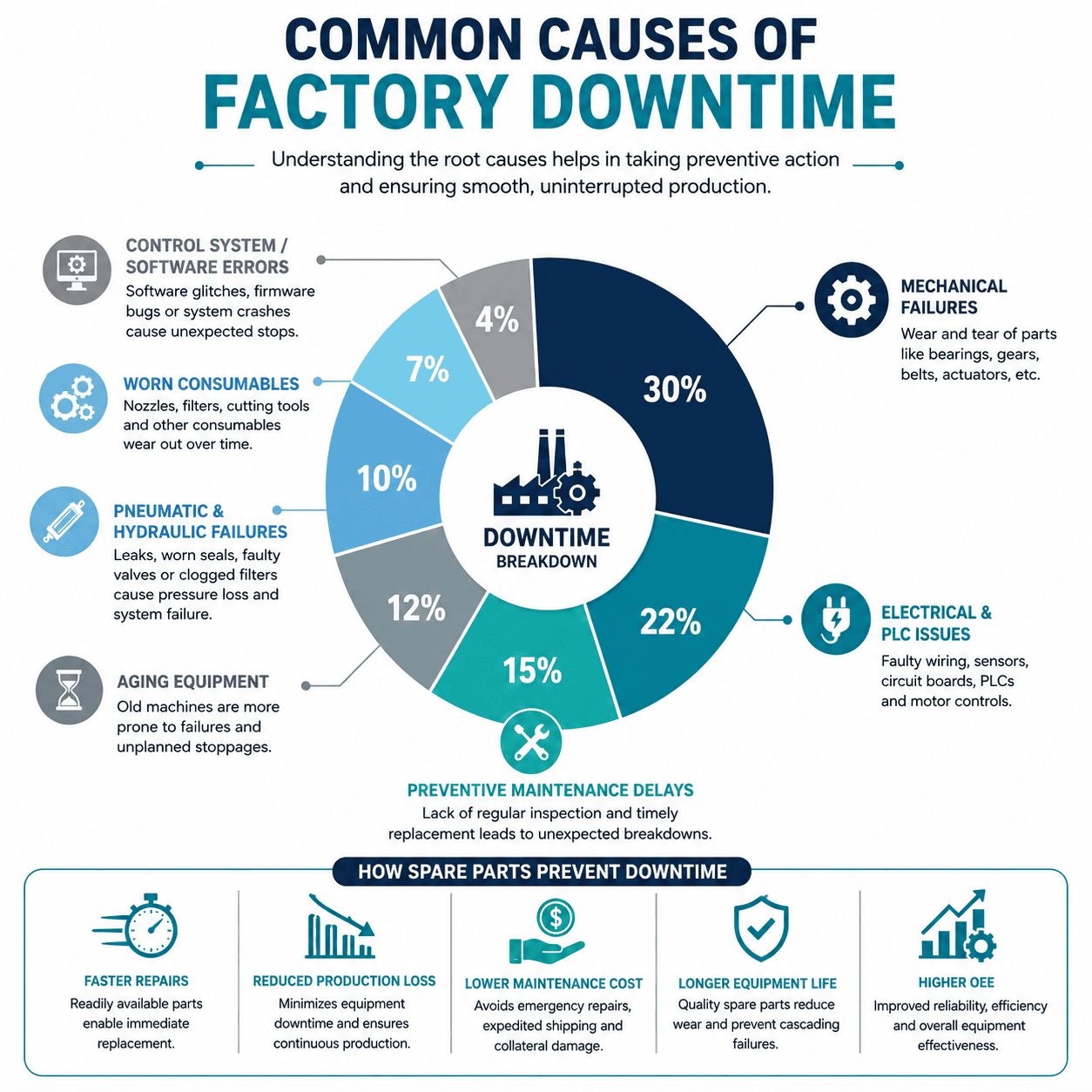
In the fast-paced world of modern manufacturing and industrial automation, maintaining continuous operation is paramount. Factory downtime, an unwelcome interruption to production, can severely impact profitability, efficiency, and market competitiveness. Understanding its root causes and implementing proactive strategies, particularly through effective spare parts management, is critical for operational resilience and success.
Overview
Factory downtime refers to any period when production equipment, machinery, or an entire manufacturing line is unexpectedly non-operational. This critical operational issue can range from minor stoppages to complete facility shutdowns. It "works" by halting the production flow, leading to lost output, delayed deliveries, and significant financial losses. Preventing downtime is vitally important because it directly impacts a company's bottom line, customer satisfaction, and overall operational efficiency. It is commonly experienced and rigorously avoided across all sectors of industrial manufacturing, including SMT, semiconductor production, automotive, electronics assembly, and general industrial automation.
Key Factors to Consider
Mechanical Failure
Mechanical components like bearings, gears, belts, and actuators are subject to wear and tear. Without timely inspection and replacement, these parts can fail catastrophically, bringing production to a halt. Maintaining a stock of genuine spare mechanical parts allows for quick replacement, preventing prolonged outages and safeguarding the integrity of the entire machine.
Electrical Malfunctions
Issues with electrical systems, including faulty wiring, sensors, circuit boards, PLCs, and motor controls, are frequent culprits behind unexpected downtime. A short circuit, component failure, or software glitch can render complex machinery inoperable. Readily available spare electrical components enable rapid fault diagnosis and replacement, minimizing downtime duration.
Pneumatic and Hydraulic System Issues
Many industrial machines, from CNC equipment to robotic arms, rely on pneumatic or hydraulic systems for movement and control. Leaks in hoses, worn seals, malfunctioning valves, or clogged filters can lead to pressure loss and system failure. Having spare seals, hoses, and valves on hand is essential for immediate repairs, preventing extensive damage and production delays.
Control System and Software Glitches
Modern industrial equipment is often controlled by sophisticated software and embedded systems. Firmware bugs, sensor calibration drift, or unexpected system crashes can lead to operational errors or complete shutdowns. While spare software components are less tangible, having up-to-date backups and readily accessible compatible hardware spares (like control boards or human-machine interface panels) is crucial for quick recovery.
Consumable Wear and Tear
Consumables such as nozzles for SMT machines, filters in semiconductor fabrication, cutting tools in CNC machinery, or welding tips in robotics naturally degrade over time. Their predictable wear requires planned replacement. A well-managed inventory of these spare consumables ensures that routine maintenance can proceed without waiting for parts, avoiding unscheduled downtime caused by component exhaustion.
Benefits
Minimized Production Interruptions
Having critical spare parts readily available significantly reduces the time equipment is out of service. Instead of waiting for parts to be ordered and delivered, maintenance teams can perform immediate replacements, ensuring production lines resume operation swiftly and efficiently.
Reduced Emergency Repair Costs
Preventing catastrophic failures through proactive spare part replacement avoids the higher costs associated with emergency repairs, expedited shipping for parts, and potential damage to other interconnected components. It also reduces the need for costly overtime pay for emergency service technicians.
Extended Equipment Lifespan
Regularly replacing worn components with high-quality spare parts reduces strain on other machine elements, preventing cascading failures. This proactive approach helps maintain the machinery in optimal condition, thereby extending its overall operational lifespan and maximizing the return on investment.
Improved Operational Efficiency and Predictability
A robust spare parts inventory contributes to more predictable maintenance schedules and fewer unexpected breakdowns. This allows for better production planning, consistent output, and improved overall equipment effectiveness (OEE), leading to a more reliable and efficient manufacturing process.
Industrial Applications
Electronics Manufacturing (SMT, PCB Assembly)
Semiconductor Equipment Manufacturing
Automotive Production
Robotics and Automation Systems Integration
CNC Machining and Metal Fabrication
Buying Guide
When procuring industrial machinery or critical components, buyers must thoroughly evaluate several factors to ensure long-term operational reliability. Key considerations include the machine's condition, detailed specifications to meet production demands, the scope and duration of the warranty, and the supplier's reputation for quality and service. Crucially, assess the availability of genuine spare parts and their compatibility with existing systems to guarantee minimal downtime and efficient maintenance throughout the equipment's lifecycle.
Maintenance Tips
Effective maintenance is the cornerstone of preventing factory downtime. Implement a rigorous preventive maintenance schedule that includes regular cleaning of components, meticulous lubrication of moving parts, and routine inspection for signs of wear or damage. Calibrate sensors and control systems regularly to maintain accuracy, and invest in comprehensive operator training to ensure proper equipment usage and basic troubleshooting skills. This holistic approach significantly extends equipment life and minimizes unexpected interruptions.
Industry Trends
The manufacturing landscape is rapidly evolving with Industry 4.0 at its core, leveraging technologies like AI, IoT, and Smart Manufacturing. Predictive Maintenance, powered by IoT sensors and AI analytics, anticipates failures before they occur, drastically reducing downtime. Automation and Digital Twins further enhance operational visibility and planning, enabling optimized spare parts inventory management and more sustainable, efficient production cycles across all industrial sectors.
Frequently Asked Questions
What is the primary cause of factory downtime?
The primary causes of factory downtime are typically mechanical failures, electrical malfunctions, and the wear and tear of consumable components. These issues often stem from insufficient preventive maintenance, aging equipment, or a lack of readily available spare parts to address problems swiftly when they arise.
How do spare parts directly prevent factory downtime?
Spare parts directly prevent factory downtime by allowing for immediate replacement of failed or worn-out components. This eliminates the need to halt production while waiting for new parts to be sourced, significantly reducing mean time to repair (MTTR) and ensuring continuity of operations, especially in critical SMT, robotics, and semiconductor equipment.
What is the true cost of factory downtime?
The true cost of factory downtime extends far beyond immediate repair expenses. It encompasses lost production output, missed delivery deadlines, increased labor costs for emergency repairs, potential damage to product quality, and a negative impact on customer satisfaction and brand reputation. For highly automated lines, even short stoppages can be immensely expensive.
Conclusion