Why Preventive Maintenance Is Important for Modern Manufacturing
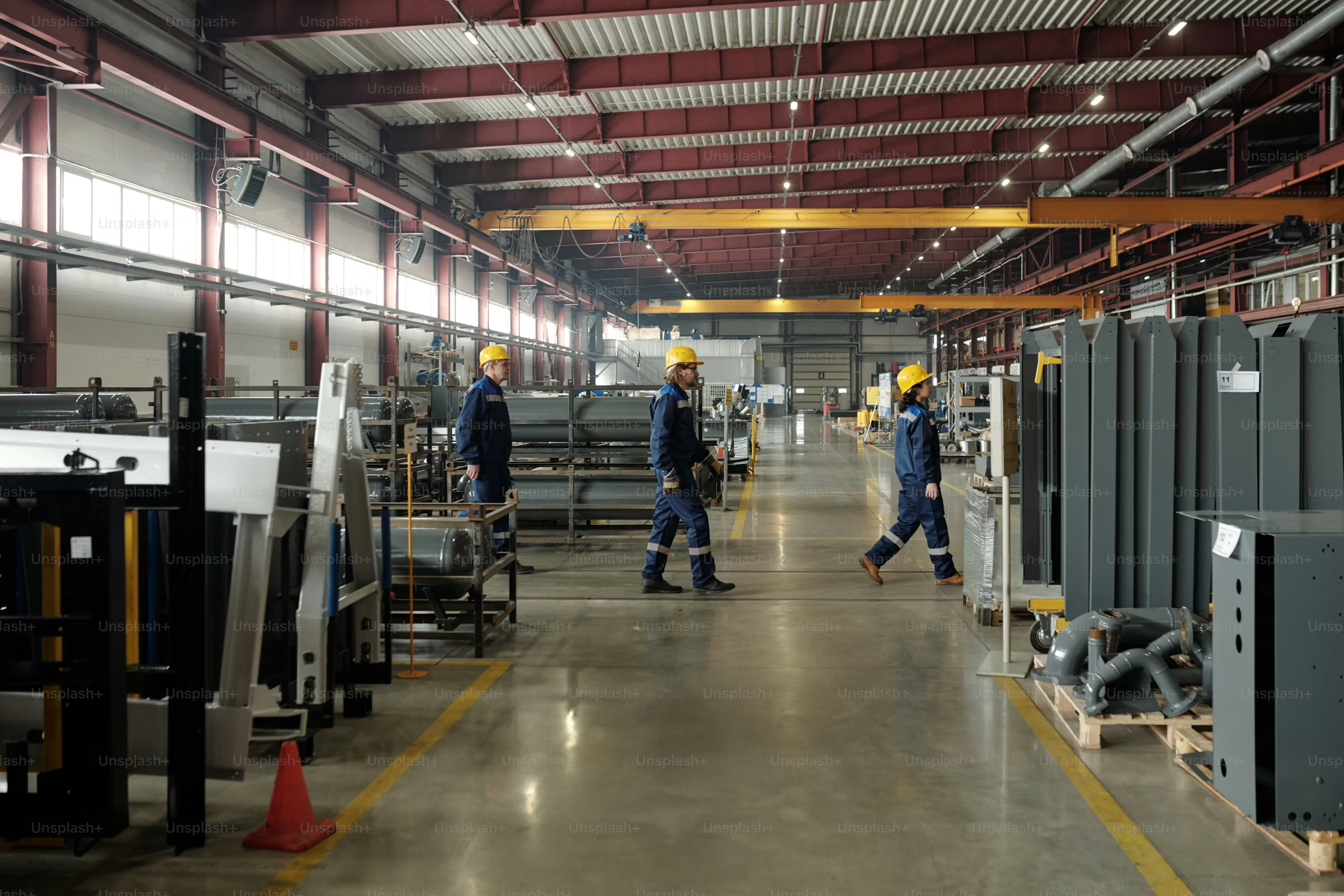
In today's highly competitive manufacturing environment, every minute of machine downtime translates into lost productivity, delayed deliveries, increased maintenance costs, and dissatisfied customers. Whether a factory operates CNC machines, industrial robots, packaging machinery, PLC-controlled systems, SMT equipment, conveyors, hydraulic systems, or production lines, equipment reliability is critical for business success.
One of the most effective ways to improve equipment performance and maximize operational efficiency is through preventive maintenance.
Preventive maintenance is no longer just a maintenance activity—it is a strategic business practice that helps manufacturers reduce unexpected failures, improve productivity, extend equipment life, and maintain consistent product quality.
For manufacturing companies across India, preventive maintenance has become an essential component of Industry 4.0 and smart manufacturing initiatives.
In this guide, KeyLeerKart explains why preventive maintenance is important, its benefits, applications, implementation strategies, and future trends shaping modern industrial maintenance.
Featured Snippet Answer
Why Is Preventive Maintenance Important?
Preventive maintenance is important because it helps prevent unexpected equipment failures, reduces downtime, extends machine lifespan, improves workplace safety, lowers repair costs, and ensures consistent production efficiency. By regularly inspecting, servicing, and replacing worn components before failures occur, manufacturers can maintain reliable operations and increase profitability.
What Is Preventive Maintenance?
Preventive maintenance is a planned maintenance strategy that involves regularly inspecting, servicing, cleaning, lubricating, calibrating, and replacing machine components before equipment failure occurs.
Unlike reactive maintenance, which addresses breakdowns after they happen, preventive maintenance focuses on preventing failures before they impact production.
Common preventive maintenance activities include:
- Lubrication
- Filter replacement
- Belt inspections
- Motor checks
- Bearing replacement
- Sensor calibration
- Hydraulic system inspection
- Electrical testing
- PLC diagnostics
- Drive maintenance
The goal is simple:
Keep equipment operating at peak performance while minimizing unexpected downtime.
Why Preventive Maintenance Matters in Manufacturing
Manufacturing facilities rely on hundreds of interconnected components.
A single failed bearing, sensor, motor, drive, PLC module, conveyor belt, or hydraulic valve can halt an entire production line.
Without preventive maintenance, companies often face:
- Unexpected machine breakdowns
- Production delays
- Higher repair costs
- Poor product quality
- Increased safety risks
- Reduced customer satisfaction
Preventive maintenance helps eliminate these challenges before they become costly problems.
Key Benefits of Preventive Maintenance
1. Reduces Unplanned Downtime
Unexpected equipment failures can stop production immediately.
Preventive maintenance identifies potential issues before breakdowns occur.
Benefits
- Continuous production
- Improved equipment availability
- Better delivery performance
- Reduced emergency repairs
2. Extends Equipment Lifespan
Industrial machines are significant investments.
Routine maintenance protects critical components from excessive wear.
Examples include:
- Bearings
- Motors
- Gearboxes
- Drives
- Hydraulic systems
Result
Machines operate efficiently for longer periods.
3. Lowers Maintenance Costs
Emergency repairs are often expensive.
Breakdowns typically require:
- Urgent spare parts
- Overtime labor
- Production stoppages
Preventive maintenance allows planned repairs at a lower cost.
4. Improves Workplace Safety
Faulty machinery can create hazardous conditions.
Preventive inspections help detect:
- Electrical faults
- Hydraulic leaks
- Loose components
- Overheating motors
This reduces accidents and improves worker safety.
5. Enhances Product Quality
Poorly maintained equipment can produce defective products.
Preventive maintenance ensures:
- Accurate machine calibration
- Consistent operation
- Reliable performance
Resulting in higher-quality output.
6. Improves Energy Efficiency
Machines operating under poor conditions consume more energy.
Regular maintenance helps:
- Reduce friction
- Optimize performance
- Minimize energy waste
Lower energy consumption directly reduces operating costs.
7. Increases Production Efficiency
Healthy machines operate at maximum efficiency.
Benefits include:
- Higher throughput
- Faster cycle times
- Improved production scheduling
- Better resource utilization
Preventive Maintenance vs Reactive Maintenance
| Feature | Preventive Maintenance | Reactive Maintenance |
|---|---|---|
| Planning | Scheduled | Unplanned |
| Downtime | Low | High |
| Repair Cost | Lower | Higher |
| Equipment Life | Extended | Reduced |
| Safety | Improved | Increased Risk |
| Production Loss | Minimal | Significant |
| Spare Parts Planning | Efficient | Emergency Purchasing |
| Reliability | High | Unpredictable |
Types of Preventive Maintenance
Time-Based Maintenance
Performed at regular intervals.
Examples:
- Monthly inspections
- Quarterly servicing
- Annual overhauls
Usage-Based Maintenance
Performed after specific operating hours.
Examples:
- Every 500 operating hours
- Every 1,000 production cycles
Condition-Based Maintenance
Triggered by equipment condition monitoring.
Examples:
- Vibration analysis
- Thermal imaging
- Oil analysis
Predictive Maintenance
Uses sensors and AI to predict failures.
Common technologies:
- Industrial IoT
- Machine learning
- Smart sensors
Applications of Preventive Maintenance
CNC Machines
Maintenance includes:
- Spindle inspections
- Lubrication
- Servo motor checks
- Tool changer servicing
Industrial Robots
Tasks include:
- Joint lubrication
- Encoder calibration
- Controller diagnostics
Packaging Machinery
Maintenance focuses on:
- Conveyor systems
- Pneumatic components
- Sealing mechanisms
SMT Equipment
Preventive maintenance ensures:
- Accurate component placement
- Reliable feeders
- Reduced production defects
PLC and Automation Systems
Includes:
- Software backups
- I/O testing
- Network inspections
Hydraulic Systems
Maintenance prevents:
- Pressure loss
- Leakage
- Component wear
Industry Examples
Automotive Manufacturing
Automotive plants use preventive maintenance to keep robotic assembly lines operating continuously.
Benefits:
- Higher uptime
- Better quality
- Reduced production interruptions
Electronics Manufacturing
SMT production lines rely heavily on preventive maintenance to maintain precision and throughput.
Food Processing Industry
Routine maintenance helps maintain hygiene standards and production consistency.
Pharmaceutical Manufacturing
Preventive maintenance supports compliance and product quality requirements.
Packaging Industry
Regular inspections prevent conveyor and sealing failures that can delay shipments.
Common Components Requiring Preventive Maintenance
Manufacturers should regularly inspect:
- Bearings
- Motors
- Gearboxes
- PLCs
- VFD Drives
- Sensors
- Conveyors
- Hydraulic Pumps
- Pneumatic Cylinders
- Industrial Robots
- Switchgear
- Power Supplies
Reliable spare parts sourcing is critical for successful maintenance programs.
Buyer Guide: Choosing Maintenance Spare Parts
Select Quality Components
Always choose reliable industrial-grade parts.
Verify Compatibility
Ensure parts match equipment specifications.
Consider OEM and Equivalent Parts
Both options can provide value depending on application requirements.
Maintain Spare Parts Inventory
Critical components should be stocked to reduce downtime.
Work with Trusted Suppliers
Partner with experienced industrial spare parts suppliers like KeyLeerKart.
Future Trends in Preventive Maintenance
AI-Powered Predictive Maintenance
Artificial Intelligence will increasingly predict failures before they occur.
Industrial IoT Monitoring
Connected sensors will provide real-time machine health data.
Digital Twin Technology
Virtual machine models will improve maintenance planning.
Smart Maintenance Software
CMMS systems will automate maintenance scheduling and reporting.
Remote Monitoring
Engineers will monitor machine health from anywhere.
Industry 4.0 Integration
Maintenance strategies will become fully integrated into smart factory ecosystems.
People Also Ask (PAA)
What is preventive maintenance?
Preventive maintenance is a planned maintenance strategy designed to prevent equipment failures before they occur.
Why is preventive maintenance important?
It reduces downtime, extends machine life, improves safety, and lowers repair costs.
How often should preventive maintenance be performed?
The schedule depends on machine type, operating hours, and manufacturer recommendations.
What industries use preventive maintenance?
Manufacturing, automotive, food processing, electronics, pharmaceuticals, packaging, and logistics industries.
Can preventive maintenance reduce costs?
Yes. Planned maintenance is significantly less expensive than emergency breakdown repairs.
Voice Search Questions
- Why is preventive maintenance important in manufacturing?
- How does preventive maintenance reduce downtime?
- What are the benefits of preventive maintenance?
- How often should industrial machines be maintained?
- What is the difference between preventive and reactive maintenance?
- How can preventive maintenance improve productivity?
- What equipment requires preventive maintenance?
- How does predictive maintenance work?
- Can preventive maintenance extend machine life?
- Why do factories need maintenance schedules?
Direct Answers
Does preventive maintenance reduce downtime?
Yes. Preventive maintenance identifies and fixes potential issues before equipment failure occurs, significantly reducing downtime.
Can preventive maintenance increase productivity?
Yes. Well-maintained equipment operates more efficiently and consistently.
Does preventive maintenance save money?
Yes. Planned maintenance is far less costly than emergency repairs and production losses.
10 Frequently Asked Questions
1. What is preventive maintenance?
A scheduled approach to maintaining equipment before breakdowns occur.
2. Why is preventive maintenance important?
It improves reliability, safety, and efficiency while reducing costs.
3. What equipment requires preventive maintenance?
Most industrial equipment including CNC machines, robots, conveyors, drives, PLCs, and hydraulic systems.
4. How does preventive maintenance improve safety?
It identifies hazards before they become dangerous.
5. What is predictive maintenance?
A data-driven approach that predicts failures using sensors and analytics.
6. How does maintenance improve product quality?
Properly functioning equipment produces consistent results.
7. Can maintenance reduce energy consumption?
Yes. Efficient equipment consumes less energy.
8. How often should maintenance be scheduled?
According to equipment usage, operating conditions, and manufacturer recommendations.
9. Is preventive maintenance suitable for small manufacturers?
Absolutely. Even basic maintenance programs provide significant benefits.
10. Where can manufacturers source replacement parts?
Trusted suppliers like KeyLeerKart provide industrial spare parts and maintenance components.
Internal Linking Suggestions
Link this blog to:
- Industrial Spare Parts Guide
- PLC Maintenance Best Practices
- Industrial Robot Maintenance
- CNC Machine Spare Parts
- VFD Drives and Automation Components
- Hydraulic System Components
- Industrial Sensors and Controls
- Smart Factory Technologies
Conclusion
Preventive maintenance is one of the most effective strategies for improving manufacturing reliability, reducing downtime, extending equipment lifespan, and lowering operational costs. As industries move toward Industry 4.0 and smart manufacturing, proactive maintenance practices are becoming essential for maintaining competitiveness and maximizing return on investment.
For manufacturers in India, implementing a strong preventive maintenance program can significantly improve operational efficiency while ensuring consistent production performance.
Call-To-Action
Looking for reliable industrial spare parts, automation components, PLCs, drives, sensors, motors, hydraulic components, and maintenance solutions?
KeyLeerKart provides high-quality industrial products and sourcing support to help manufacturers maintain peak equipment performance and reduce downtime.
Contact KeyLeerKart today to find the right spare parts and maintenance solutions for your manufacturing operations.