
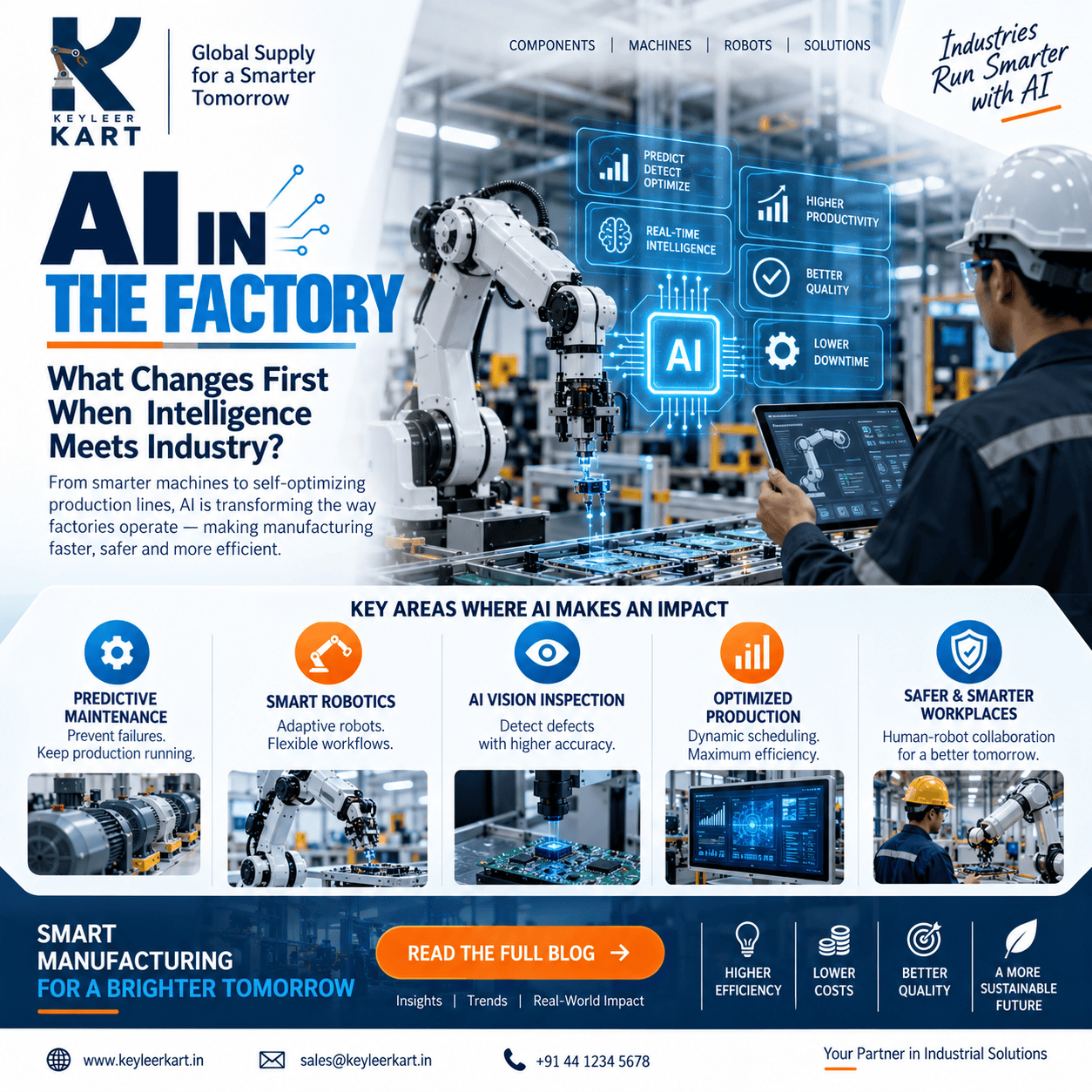
The manufacturing landscape is undergoing a profound transformation as Artificial Intelligence (AI) moves beyond theoretical models and computer screens, directly integrating into the physical operations of factories. This shift is not just an upgrade; it's a fundamental redefinition of industrial automation, promising unprecedented levels of efficiency, precision, and adaptability across SMT lines, semiconductor fabs, robotics cells, and CNC machinery, making it an indispensable topic for modern manufacturing professionals.
Overview
The entry of AI into the factory signifies the deployment of intelligent algorithms and machine learning models directly into operational technology (OT) systems and physical equipment. Unlike traditional automation, which follows pre-programmed instructions, AI-driven systems learn from data, adapt to changing conditions, and make autonomous decisions in real-time. This involves embedding AI capabilities into industrial robots, vision inspection systems, CNC machines, and even entire production lines. For instance, AI algorithms process sensor data from machinery, identify patterns indicative of potential failures, optimize production parameters, or guide robotic arms for intricate assembly tasks.
This integration is crucial because it elevates manufacturing from mere automation to true intelligence. It allows factories to overcome limitations of fixed programming, enabling dynamic adjustments, predictive insights, and continuous improvement. AI's ability to analyze vast datasets far exceeds human capability, leading to optimized resource utilization, reduced waste, and enhanced product quality. Its applications are widespread, commonly found in high-precision environments such as electronics manufacturing, semiconductor production, automotive assembly plants, aerospace component fabrication, and any complex discrete manufacturing facility striving for higher throughput and reduced human error.
Key Factors to Consider
1. Real-time Data Processing & Edge AI Deployment
The immediate impact of AI in the factory is the shift towards processing data at the source (the "edge"). This enables machinery to make instant, localized decisions without relying on cloud connectivity, crucial for time-sensitive operations like robotic path planning, anomaly detection in CNC machining, or precise component placement on an SMT line, significantly reducing latency and enhancing responsiveness.
2. Adaptive Robotics & Human-Robot Collaboration
AI empowers industrial robots and cobots to learn and adapt to dynamic environments. This means robots can now handle variations in product placement, adjust their grippers for different part types, or safely collaborate with human operators on shared tasks, reducing the need for rigid fixturing and reprogramming, and boosting flexibility in assembly and material handling.
3. Predictive Maintenance Integration
One of the first and most impactful changes is the widespread adoption of AI-powered predictive maintenance. By analyzing real-time sensor data from semiconductor equipment, SMT machines, or CNC machinery, AI algorithms can accurately forecast equipment failures before they occur, enabling proactive repairs, minimizing unplanned downtime, and extending the lifespan of critical assets.
4. Automated Quality Inspection with Vision AI
AI-driven computer vision systems are rapidly becoming the primary method for quality control. These systems can detect microscopic defects on PCBs, inconsistencies in semiconductor wafers, or subtle flaws in machined parts with unparalleled speed and accuracy, surpassing human inspection capabilities and ensuring consistently high product quality while reducing scrap rates.
5. Dynamic Production Scheduling & Optimization
AI algorithms are revolutionizing production planning by dynamically optimizing schedules based on real-time factors like machine availability, material flow, and order priority. This intelligence can quickly reconfigure SMT lines or CNC job queues to maximize throughput, minimize bottlenecks, and respond flexibly to sudden changes in demand or supply chain disruptions.
Benefits
Enhanced Operational Efficiency
AI streamlines manufacturing processes by optimizing machine performance, reducing idle times, and automating complex tasks, leading to higher output and lower operational costs across the entire production ecosystem, from material handling to final assembly.
Superior Product Quality
Through AI-powered vision systems and process control, defects are identified and corrected instantly, ensuring consistent product quality and adherence to strict specifications, particularly critical in semiconductor and electronics manufacturing.
Reduced Downtime & Costs
Predictive maintenance capabilities minimize unexpected equipment failures, significantly reducing costly unplanned downtime, repair expenses, and extending the operational life of valuable industrial automation and SMT equipment.
Increased Safety & Ergonomics
AI enables robots and cobots to perform hazardous or repetitive tasks, mitigating risks for human workers. Furthermore, AI can optimize workstation setups for improved ergonomics, contributing to a safer and healthier factory environment.
Industrial Applications
Electronics Manufacturing & PCB Assembly
Semiconductor Equipment & Wafer Fabrication
Automotive Manufacturing & Robotic Assembly
CNC Machining & Precision Metalworking
Pharmaceutical & Medical Device Production
Buying Guide
When evaluating AI-integrated industrial equipment, buyers should thoroughly assess the machine's condition, detailed specifications, and available warranty. Crucially, scrutinize the supplier's reputation for reliability and after-sales support, ensure the availability of spare parts, and verify the new equipment's compatibility with existing factory infrastructure and software systems for seamless integration.
Maintenance Tips
To maximize the longevity and performance of AI-enabled industrial machinery, implement a robust preventive maintenance schedule. Regularly clean sensitive components, lubricate moving parts, conduct thorough inspections for wear, and recalibrate sensors and robotic arms to maintain precision. Consistent operator training on AI system interfaces and troubleshooting is also vital.
Industry Trends
The convergence of AI with Industry 4.0 pillars is accelerating the advent of Smart Manufacturing. This synergy leverages the Internet of Things (IoT) for vast data collection, AI for intelligent analysis, and Digital Twins for virtual simulation, enabling predictive maintenance, autonomous decision-making, and unparalleled operational optimization. The focus is increasingly on automation, sustainability, and creating highly resilient, agile production environments that can adapt to global challenges while minimizing environmental impact.
Frequently Asked Questions
What's the immediate impact of AI on factory workers?
The immediate impact often involves a shift in job roles rather than outright replacement. AI takes over repetitive, dangerous, or physically demanding tasks, allowing human workers to focus on higher-value activities such as AI system monitoring, programming, maintenance, problem-solving, and continuous improvement initiatives. Training and reskilling programs become crucial for this transition.
How does AI improve manufacturing quality?
AI significantly enhances manufacturing quality through advanced capabilities like real-time anomaly detection, predictive process control, and hyper-accurate automated visual inspection. By learning from vast datasets, AI systems can identify subtle defects invisible to the human eye, optimize machine parameters to prevent flaws, and ensure consistent adherence to stringent quality standards.
Is AI integration expensive for SMEs?
While initial AI integration can represent an investment, its cost-effectiveness for Small and Medium-sized Enterprises (SMEs) is rapidly improving. Scalable AI solutions, edge computing, and AI-as-a-Service models make advanced capabilities more accessible. The return on investment (ROI) often comes swiftly through reduced waste, increased efficiency, minimized downtime, and enhanced product quality, making it a viable strategy for competitive SMEs.



