
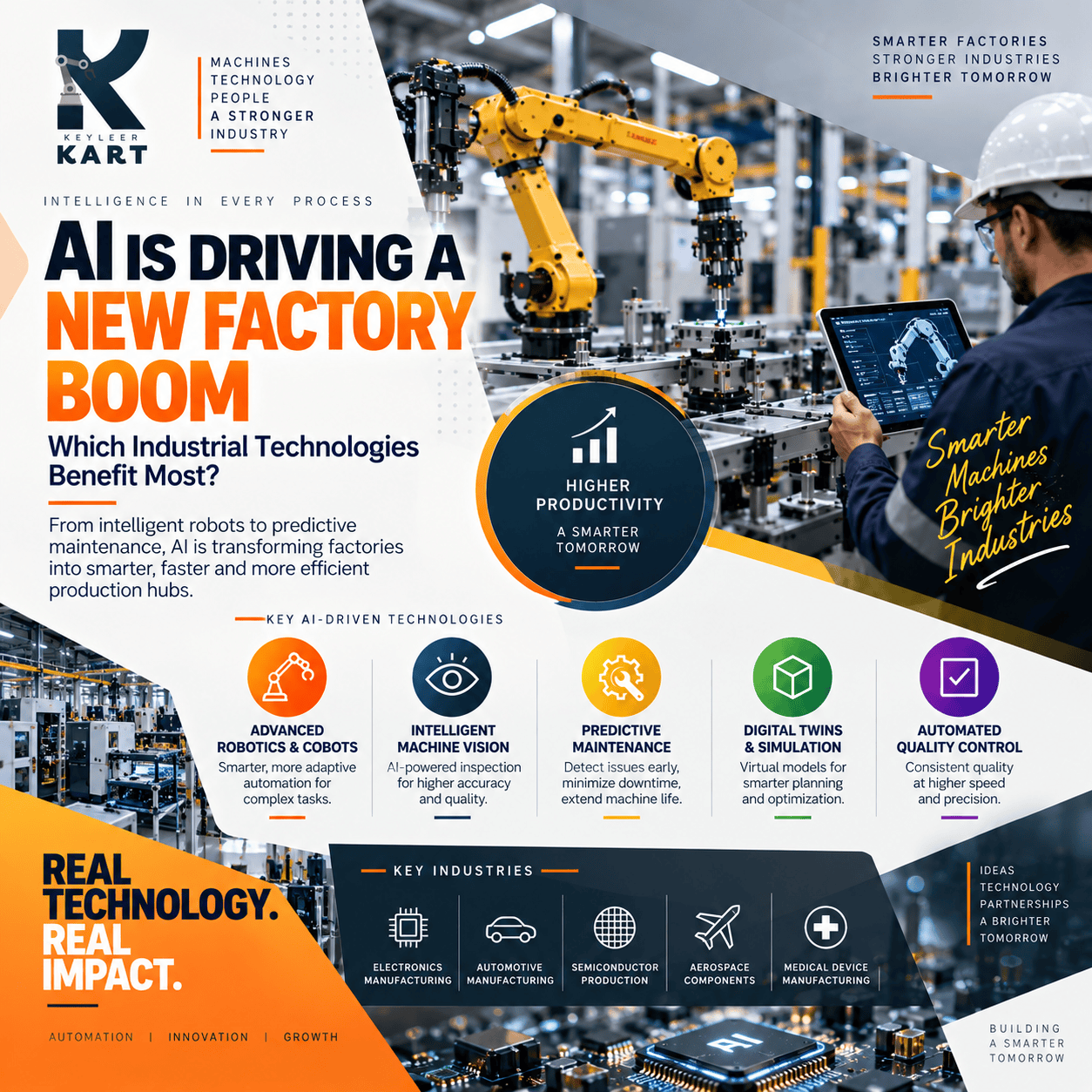
The convergence of Artificial Intelligence with industrial automation is igniting a profound transformation across the global manufacturing landscape. This isn't just an incremental improvement; it's a fundamental shift towards smarter, more adaptive factories, propelling a new era of productivity, precision, and profitability in modern manufacturing and industrial automation.
Overview
The "AI-driven factory boom" refers to the comprehensive integration of Artificial Intelligence capabilities into every facet of industrial operations, moving beyond traditional automation to create intelligent, self-optimizing manufacturing environments. AI leverages advanced algorithms and machine learning to analyze vast amounts of data—from sensor readings and production metrics to quality control images—identifying patterns, predicting outcomes, and making autonomous decisions in real-time. This intelligence enables machines to learn, adapt, and improve processes continuously, significantly enhancing efficiency, quality, and flexibility. It is critical for modern manufacturers seeking a competitive edge, allowing for faster innovation, personalized production, and resilient supply chains. This transformative technology is widely adopted across high-stakes sectors such as electronics manufacturing, semiconductor fabrication, automotive assembly, aerospace, and advanced medical device production, where precision, speed, and reliability are paramount.
Key Factors to Consider / Key Features
Advanced Robotics and Collaborative Robots (Cobots)
AI empowers industrial robots and cobots with enhanced perception, learning capabilities, and decision-making, allowing them to perform complex, adaptive tasks. This includes vision-guided picking, dynamic path planning, and safe, intuitive human-robot interaction, pushing the boundaries of automated assembly and material handling.
Intelligent Machine Vision Systems
AI-powered machine vision systems revolutionize quality control and inspection. By leveraging deep learning, these systems can detect microscopic defects, verify intricate assemblies, and perform highly accurate measurements at unprecedented speeds, significantly surpassing traditional methods and human limitations in accuracy and consistency.
Predictive Maintenance and Anomaly Detection
AI algorithms analyze real-time data from sensors embedded in machinery to predict potential equipment failures before they occur. This proactive approach minimizes unscheduled downtime, optimizes maintenance schedules, reduces repair costs, and extends the lifespan of critical industrial assets, ensuring continuous production.
Digital Twins and Simulation
AI enriches digital twins by feeding them with real-time operational data and applying advanced analytics to create highly accurate virtual replicas of physical assets, processes, or entire factories. This enables manufacturers to simulate scenarios, optimize performance, and identify potential issues without impacting physical production.
Automated Quality Control and Inspection
Beyond basic defect detection, AI-driven quality control integrates machine learning to understand complex product specifications and identify deviations from perfect quality. This includes pattern recognition for surface imperfections, dimensional accuracy verification, and functional testing, ensuring unparalleled product reliability and consistency.
Benefits
Increased Operational Efficiency
AI optimizes production schedules, reduces material waste, and streamlines workflows by intelligently coordinating machinery and processes. This leads to significantly higher throughput and resource utilization across the entire manufacturing floor, boosting overall productivity.
Enhanced Product Quality and Consistency
Through AI-driven precision inspection, real-time process adjustments, and anomaly detection, manufacturers achieve superior product quality. AI ensures that every item meets stringent standards, minimizes defects, and maintains high consistency across all production batches.
Significant Cost Reduction
AI contributes to substantial cost savings by minimizing downtime through predictive maintenance, optimizing energy consumption, reducing scrap rates, and streamlining labor-intensive tasks. This leads to a healthier bottom line and improved return on investment.
Accelerated Time-to-Market
AI-powered simulation, rapid prototyping, and optimized production cycles enable manufacturers to develop, test, and bring new products to market much faster. This agility allows businesses to respond quickly to market demands and gain a competitive advantage.
Industrial Applications
Electronics Manufacturing & PCB Assembly
Semiconductor Equipment Production
Automotive Manufacturing & Assembly
Aerospace and Defense Components
Medical Device Manufacturing & Diagnostics
Buying Guide
When evaluating industrial technologies benefiting from AI, buyers must meticulously assess machine condition, ensuring it meets performance benchmarks and longevity expectations. Critical evaluation of technical specifications, comprehensive warranty terms, and the supplier's reputation for reliability and support is paramount. Furthermore, buyers should confirm the availability of genuine spare parts and ensure seamless compatibility with existing factory automation infrastructure and software ecosystems to facilitate smooth integration and future scalability.
Maintenance Tips
To maximize the longevity and performance of AI-driven industrial equipment, implementing a robust preventive maintenance schedule is crucial. Regular cleaning, precise lubrication of moving parts, and periodic inspection for wear and tear are fundamental. Calibration of sensors and AI models ensures accuracy, while continuous operator training on new features and troubleshooting protocols guarantees optimal utilization and immediate issue resolution, maintaining peak operational efficiency.
Industry Trends
The current industrial landscape is defined by Industry 4.0, with AI, IoT, and Smart Manufacturing at its core. These trends are driving a paradigm shift towards highly interconnected, intelligent factories. Predictive Maintenance, powered by AI and IoT sensors, prevents costly downtime. Automation continues to expand, integrating seamlessly with human operations. Digital Twins offer virtual testbeds for continuous optimization, while sustainability initiatives leverage AI for resource efficiency, waste reduction, and energy management, shaping the future of industrial production.



