
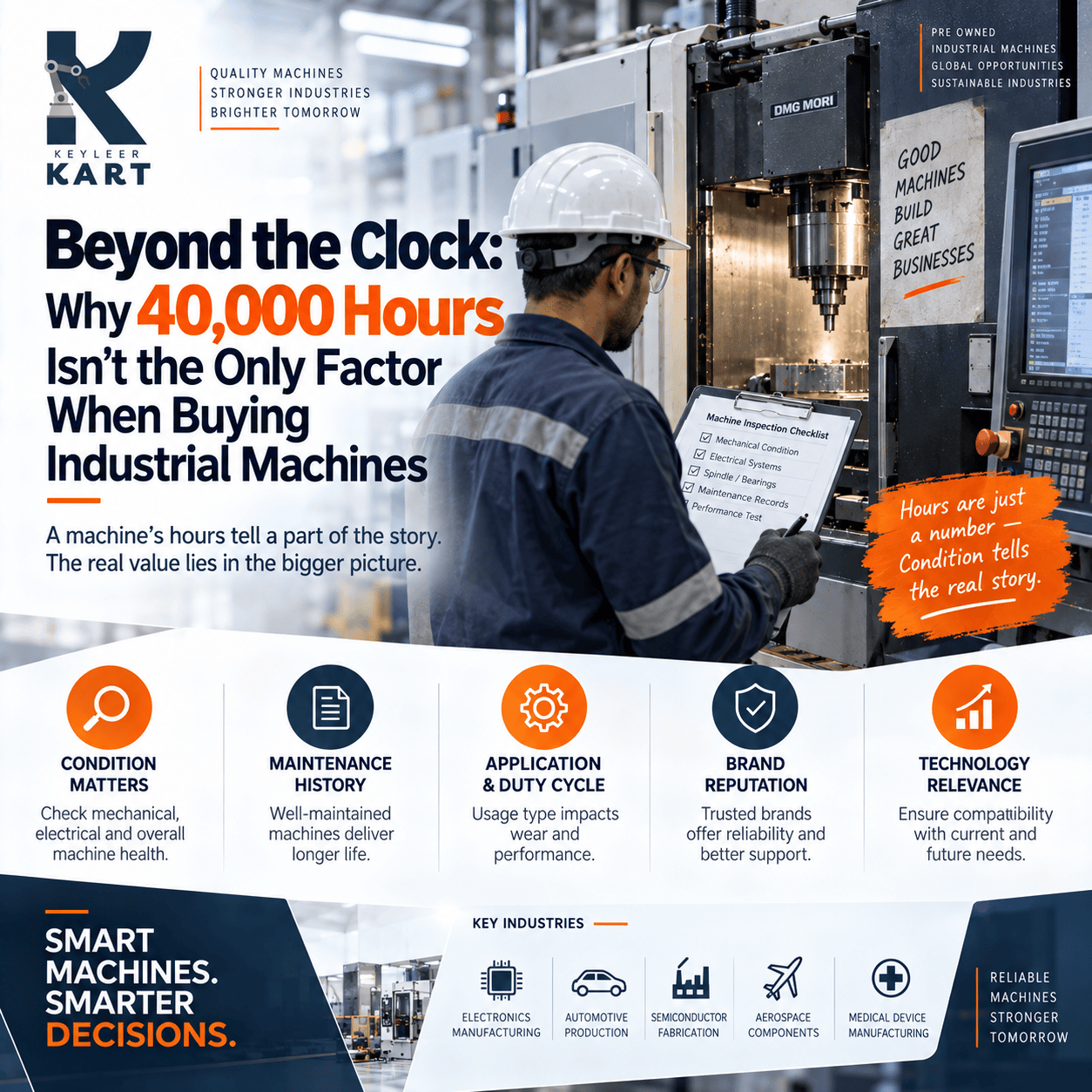
In the fast-paced world of modern manufacturing and industrial automation, the decision to invest in machinery is critical. While a machine's operational hours often serve as an initial benchmark, a singular focus on this number can be misleading. Understanding what truly dictates a machine's value, performance, and longevity beyond just its hours is paramount for making informed, strategic purchasing decisions that impact productivity and profitability.
Overview
When considering industrial machinery, be it a high-precision CNC machine, an advanced SMT pick-and-place system, a robotic arm for assembly, or semiconductor processing equipment, 'hours' typically refers to the accumulated operational time. This metric quantifies how long the machine's primary functions have been active since its commissioning. Each of these complex machines integrates mechanical, electrical, and software components that work in tandem to execute precise manufacturing processes—from cutting and shaping materials to placing tiny electronic components or automating intricate assembly lines. They are the backbone of modern production, crucial for achieving the speed, accuracy, and repeatability demanded by today's competitive markets. These machines are ubiquitous across a spectrum of industries, powering everything from electronics manufacturing facilities and automotive plants to aerospace component production and medical device assembly lines.
Key Factors to Consider
1. Comprehensive Condition Assessment
A thorough physical inspection is invaluable. Evaluate mechanical wear, electrical integrity, hydraulic/pneumatic system performance, and the condition of critical components like spindles, bearings, and servo motors. Visual cues such as rust, excessive vibration, or unusual noises during operation often reveal more about a machine's true state than its hour meter.
2. Detailed Maintenance History
The quality and consistency of a machine's maintenance record are far more indicative of its health than mere operational hours. Documentation of preventive maintenance schedules, component replacements, calibration logs, and any significant repairs provides insights into how well the machine has been cared for and potential future maintenance requirements.
3. Application and Duty Cycle
A machine operating for 40,000 hours under light, intermittent loads will likely be in better condition than one with fewer hours but subjected to continuous, heavy-duty, high-stress applications. Understanding its original intended use and actual operational duty cycle helps assess the cumulative stress and wear on its systems.
4. Manufacturer and Model Reputation
The inherent build quality and design robustness vary significantly across manufacturers and models. Reputable brands often engineer their machines for longer lifespans and better resilience, even under extensive use. Availability of spare parts, technical support, and the community knowledge base for a specific model also play a crucial role in long-term viability.
5. Technological Relevance and Obsolescence
Even a low-hour machine can be functionally obsolete if its technology is outdated. Consider the machine's software, control systems, and compatibility with modern manufacturing standards like Industry 4.0 protocols. An older machine, regardless of hours, might lack the connectivity, precision, or processing capabilities required for current and future production needs.
Benefits
Optimized Total Cost of Ownership (TCO)
Making an informed purchasing decision based on more than just hours leads to a lower TCO. By evaluating true machine health and maintenance history, buyers can avoid unexpected repair costs and ensure a more predictable operational budget, maximizing return on investment.
Enhanced Uptime & Productivity
A machine that has been well-maintained and aligns with current production needs, even with higher hours, will contribute more reliably to continuous operations. This minimizes costly downtime, sustains production schedules, and boosts overall factory output and efficiency.
Improved Product Quality
Understanding a machine's true performance capabilities, including its accuracy and repeatability, ensures that it can consistently meet required quality standards. This is vital for industries like electronics manufacturing and semiconductor production where precision directly impacts end-product quality and market competitiveness.
Strategic Capital Investment
Moving beyond a superficial hour count allows for a more strategic allocation of capital. Businesses can acquire equipment that truly matches their operational demands and future growth plans, ensuring that every investment contributes meaningfully to their long-term manufacturing strategy.
Industrial Applications
Electronics Manufacturing (SMT & PCB Assembly)
Automotive Production & Component Manufacturing
Semiconductor Fabrication & Packaging
Aerospace Component Machining
Medical Device & Pharmaceutical Equipment Manufacturing
Buying Guide
Before committing to an industrial machine purchase, buyers must conduct a holistic evaluation. Prioritize a thorough assessment of the machine's physical condition and request comprehensive maintenance records. Scrutinize technical specifications, understand warranty terms, and verify the supplier's reputation for reliability and after-sales support. Always confirm the availability of genuine spare parts and ensure the machine's seamless compatibility with existing factory automation systems and production processes to prevent costly integration challenges.
Maintenance Tips
Effective maintenance is the cornerstone of machine longevity and optimal performance. Implement a robust preventive maintenance schedule that includes regular cleaning, precise lubrication of moving parts, and periodic inspection of critical components for wear or damage. Routine calibration ensures accuracy, while continuous operator training empowers your team to identify potential issues early and perform basic troubleshooting, minimizing unexpected downtime and extending asset life.
Industry Trends
The industrial landscape is rapidly evolving with Industry 4.0 at its core. Integration of AI and IoT transforms manufacturing, enabling smart factories through real-time data collection and analysis. Predictive maintenance, powered by machine learning algorithms, anticipates failures before they occur, drastically reducing downtime. Automation and robotics continue to advance, driving efficiency. Digital twins offer virtual representations for optimization, while sustainability initiatives increasingly influence machinery design and operational practices, pushing for energy efficiency and reduced waste.
Frequently Asked Questions
Is a lower hour count always better for a used industrial machine?
Not necessarily. While a lower hour count might suggest less overall use, the actual condition and maintenance history are far more critical. A machine with 40,000 hours that has been meticulously maintained, regularly serviced, and operated under controlled conditions might outperform a lower-hour machine that has suffered from neglect, improper operation, or harsh environmental exposure.
How can I verify a machine's maintenance history if documentation is incomplete?
If formal documentation is lacking, engage certified third-party inspectors to perform a detailed mechanical and electrical assessment. Interview previous operators or maintenance personnel if possible. Consider diagnostic software analysis if available for the specific machine, as modern equipment often logs internal operational data that can reveal patterns of use and potential issues.
What role does software and control systems play in a used machine's value, regardless of hours?
Software and control systems are paramount. An older machine, even with low hours, might be incompatible with current production software, lack necessary connectivity for Industry 4.0 integration, or require proprietary, expensive updates. Assess if the control system is robust, easily programmable, and supports modern communication protocols, as this significantly impacts its ability to integrate into contemporary smart manufacturing environments.



