
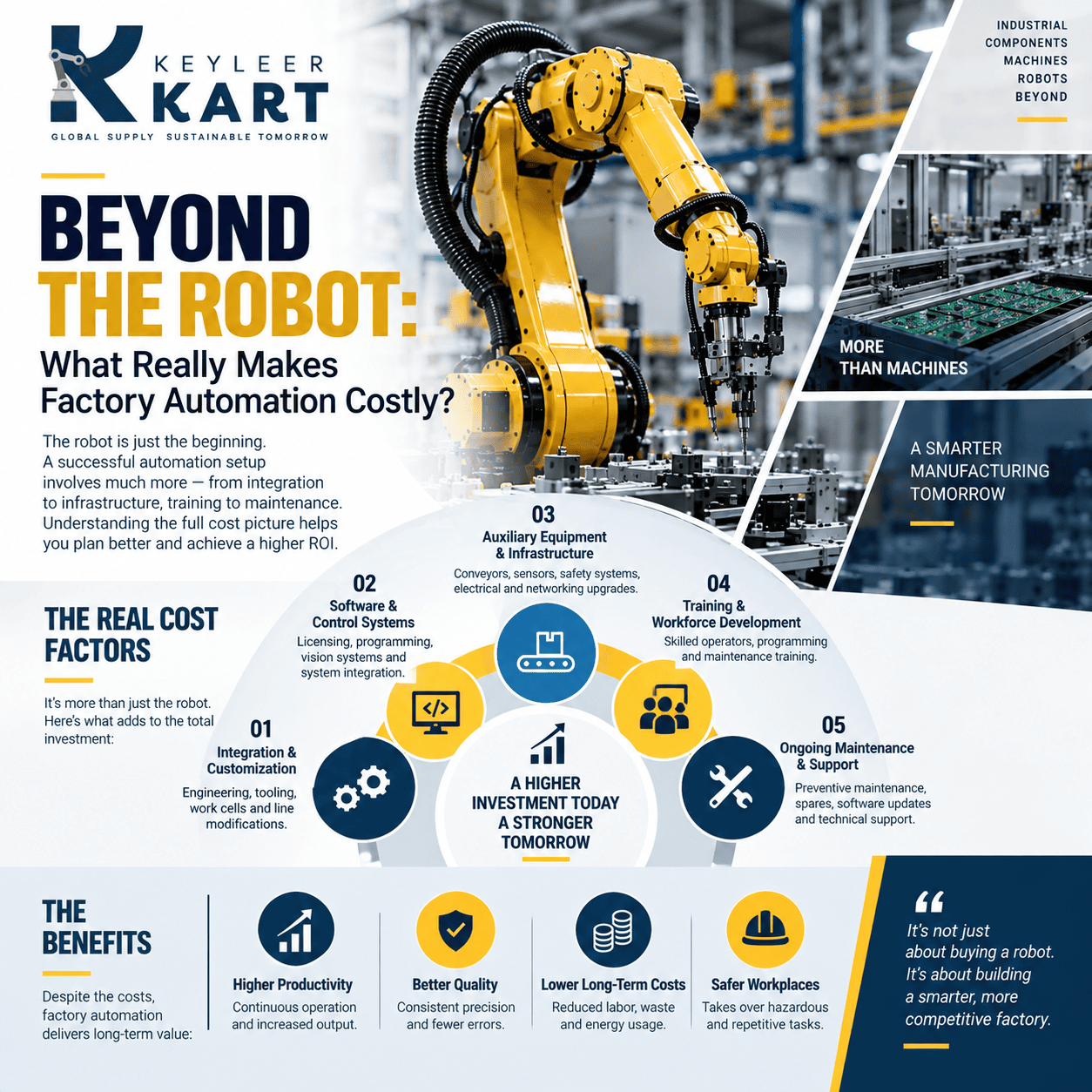
In modern manufacturing, industrial automation is no longer a luxury but a necessity for competitiveness. While the upfront cost of a robotic arm might seem significant, it often represents only a fraction of the total investment required for a successful automation deployment. Understanding the broader cost landscape is crucial for electronics manufacturing, SMT, semiconductor equipment, and general industrial sectors to achieve optimal ROI and avoid unforeseen expenses.
Overview
Factory automation involves implementing technologies such as robotics, CNC machinery, automated guided vehicles (AGVs), and sophisticated control systems to perform manufacturing tasks with minimal human intervention. It works by integrating hardware, software, and sensors to execute repetitive, precise, or hazardous operations, enhancing throughput and consistency. This shift is critical for boosting productivity, improving product quality, ensuring worker safety, and enabling rapid scaling in demanding environments like PCB assembly and electronics production. Factory automation is commonly used across automotive, aerospace, food and beverage, pharmaceuticals, and extensively within the electronics manufacturing ecosystem, including semiconductor fabs and SMT lines.
Key Factors to Consider / Key Features
1. Integration and Customization
The core robot is a standalone component; its real value emerges through seamless integration into existing production lines. This involves custom end-of-arm tooling (EOAT), designing complex work cells, safety guarding, programming interfaces with PLCs and MES systems, and potentially modifying facility layouts. Each integration is often a bespoke engineering project, driving up costs significantly.
2. Software and Control Systems
Advanced automation requires sophisticated software for robot control, vision systems, data analytics, and connectivity (IoT). Licensing fees, custom programming for specific applications, and the development of intuitive human-machine interfaces (HMIs) add substantial costs. Ensuring compatibility with existing enterprise resource planning (ERP) and manufacturing execution systems (MES) also demands significant software engineering efforts.
3. Auxiliary Equipment and Infrastructure
Beyond the robot, a fully functional automated system requires numerous auxiliary components. These include conveyors, part feeders, quality inspection systems (e.g., AOI for SMT), material handling solutions, sensors, and safety interlocks. Furthermore, upgrades to electrical infrastructure, compressed air systems, and robust networking are often necessary to support the new automated cell.
4. Training and Workforce Development
Successfully implementing automation necessitates a skilled workforce capable of operating, programming, and maintaining the new systems. This involves significant investment in training existing employees or hiring specialized talent. The cost of upskilling technicians, engineers, and operators to work alongside robots and interpret data from smart manufacturing platforms is a critical, often underestimated, expense.
5. Ongoing Maintenance and Support
Automation systems, particularly those in high-volume production environments like semiconductor equipment or electronics assembly, require rigorous preventive maintenance, calibration, and potential spare parts replacement. Long-term service agreements, software updates, and responsive technical support from equipment suppliers are essential to ensure uptime and performance, contributing to the total cost of ownership.
Benefits
1. Enhanced Productivity and Throughput
Automated systems operate continuously with high precision and speed, significantly increasing production output and throughput compared to manual processes, crucial for meeting demand in electronics manufacturing and SMT.
2. Improved Quality and Consistency
Robots and CNC machinery perform tasks with repeatable accuracy, minimizing human error and ensuring consistent product quality, which is vital for semiconductor fabrication and precision PCB assembly.
3. Reduced Operational Costs (Long-term)
While initial investment is high, automation reduces labor costs, material waste, and energy consumption in the long run, leading to significant savings and a strong return on investment over the system's lifespan.
4. Enhanced Worker Safety
Automating hazardous or ergonomically challenging tasks protects workers from injury, allowing them to focus on higher-value, supervisory, or creative roles within the factory environment.
Industrial Applications
Electronics Manufacturing (PCB Assembly, component placement)
Semiconductor Equipment Production
Automotive Manufacturing and Assembly
Medical Device Production
Aerospace Component Fabrication
Buying Guide
When evaluating factory automation solutions, prospective buyers must look beyond the robot's list price. Critical factors to evaluate include the machine's condition (new vs. refurbished), detailed specifications to ensure it meets production requirements, comprehensive warranty terms, the supplier's reputation and track record, the availability and cost of spare parts, and, crucially, its compatibility with existing factory infrastructure and software systems.
Maintenance Tips
Effective maintenance is paramount for maximizing the lifespan and uptime of automation systems. Implement a rigorous preventive maintenance schedule, including regular cleaning of components, precise lubrication of moving parts, routine inspection for wear and tear, and periodic calibration of sensors and robotic arms. Continuous operator training on system diagnostics and basic troubleshooting is also vital.
Industry Trends
The industrial automation landscape is rapidly evolving with Industry 4.0 at its core. Integration of Artificial Intelligence (AI) and Internet of Things (IoT) sensors enables Smart Manufacturing through real-time data analysis, predictive maintenance, and adaptive production. The rise of digital twins creates virtual replicas for optimization, while sustainability drives demand for energy-efficient and resource-optimized automation solutions across SMT, robotics, and CNC machinery sectors.
Frequently Asked Questions
How long does it take to see ROI from factory automation?
The return on investment (ROI) for factory automation varies widely depending on the project's scope, industry, and initial investment. While some basic automation projects may show returns within 1-3 years, more complex, large-scale deployments, especially in semiconductor equipment or advanced electronics manufacturing, might require 3-5 years or more to fully amortize costs and demonstrate significant profitability through increased output and efficiency.
Can small and medium-sized enterprises (SMEs) afford factory automation?
Absolutely. While the perception is that automation is only for large corporations, SMEs can now access affordable automation solutions, particularly through collaborative robots (cobots), modular systems, and flexible leasing options. Focusing on automating specific bottlenecks or highly repetitive tasks can provide significant productivity gains and ROI, making automation accessible and beneficial for SMEs in various sectors, including SMT and CNC.
What are the biggest risks associated with implementing factory automation?
The primary risks include underestimating integration costs, insufficient workforce training, cybersecurity vulnerabilities in connected systems, and potential downtime due to technical failures or improper maintenance. Mitigating these risks requires thorough planning, robust system integration, comprehensive training programs, adherence to cybersecurity best practices, and a strong partnership with experienced automation solution providers.



