
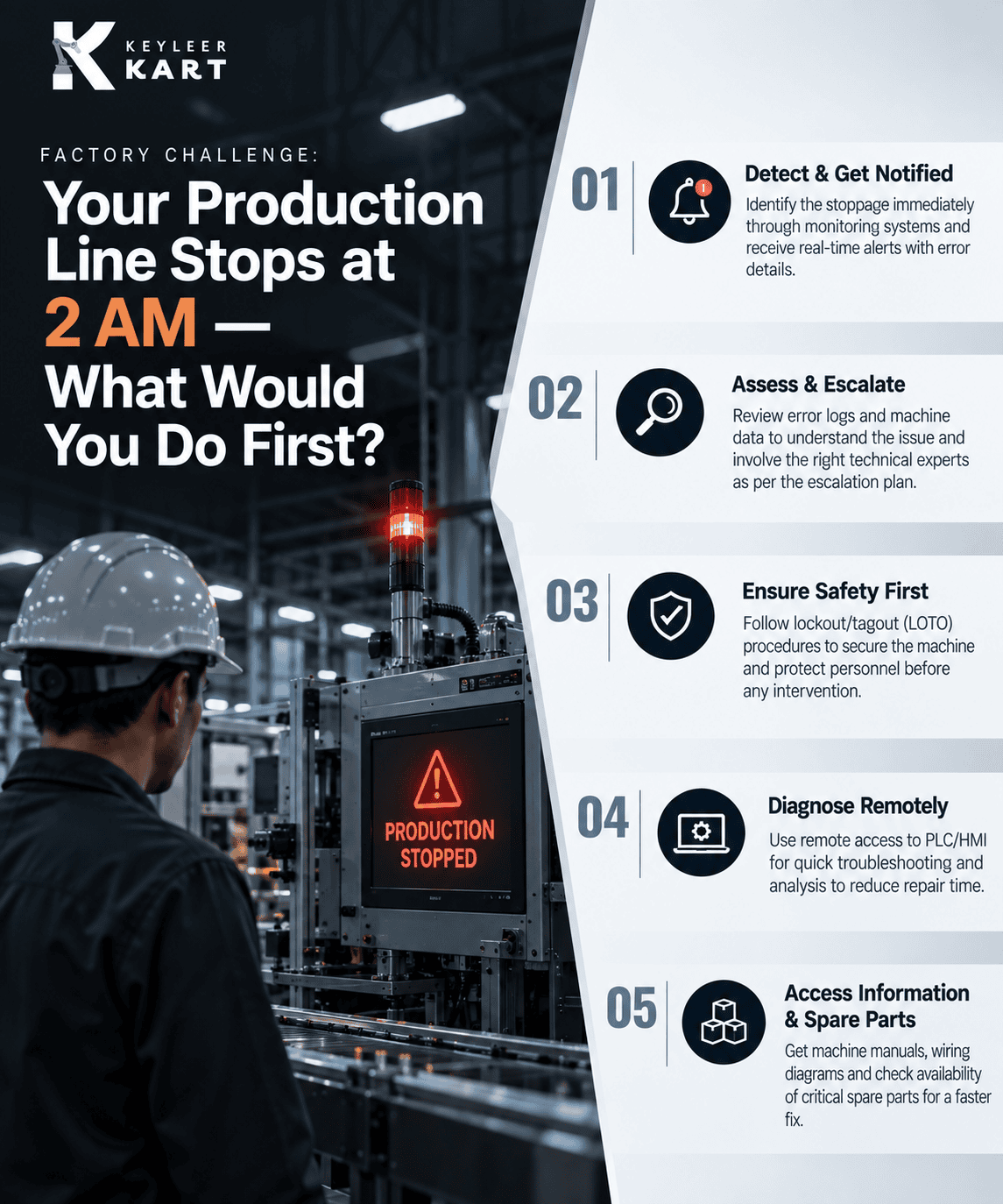
In the relentless world of modern manufacturing and industrial automation, unexpected production line stoppages are a nightmare scenario. When a critical machine grinds to a halt at 2 AM, the immediate response dictates everything from delivery schedules and operational costs to overall plant efficiency. Understanding the crucial first steps in such an emergency is paramount for any factory aiming for resilience and continuous improvement.
Overview
The "challenge" of a 2 AM production line stop refers to the critical operational situation where a vital piece of manufacturing equipment or an entire line ceases functioning unexpectedly outside of regular business hours. This scenario underscores the necessity of a robust, pre-defined incident response protocol, integrating advanced monitoring systems, rapid diagnostic tools, and a highly trained technical team. This comprehensive approach is not just a technology but a critical operational process designed to minimize the catastrophic impact of unscheduled downtime. It works by establishing a clear chain of command, automated alert systems via SCADA or MES platforms, remote access for diagnostics, and on-site emergency teams equipped with specific troubleshooting guides and access to critical spares. The importance of such a system is immense: it directly impacts profitability by reducing production losses, maintaining customer commitments, preventing costly quality defects, and safeguarding equipment integrity. This readiness is indispensable across all high-stakes manufacturing environments, from high-volume SMT assembly lines and precision semiconductor fabrication plants to automotive assembly, electronics manufacturing, and sophisticated CNC machining centers.
Key Factors to Consider
1. Immediate Anomaly Detection and Notification
The first critical step is instantaneous detection of the stoppage or anomaly. Modern factories leverage IoT sensors, machine vision, and SCADA/MES systems to monitor equipment health continuously. An effective system immediately triggers automated alerts (SMS, email, pager) to relevant on-call personnel, providing initial diagnostic data like error codes or affected machine segments.
2. Initial Assessment and Escalation Protocol
Upon notification, the priority is to perform a rapid initial assessment, often remotely. This involves reviewing error logs, diagnostic dashboards, and live machine data to determine the severity and likely cause. A clear escalation matrix ensures that the right technical experts (e.g., electrical, mechanical, controls engineers) are engaged based on the assessment, minimizing unnecessary delays.
3. Safety First: Secure the Area
Before any intervention, safety is non-negotiable. The production line must be safely locked out/tagged out (LOTO) according to established protocols to prevent accidental startup and protect personnel from hazards like moving parts, electrical shock, or chemical exposure. This step is critical even at 2 AM.
4. Remote Diagnostics and Troubleshooting
Leveraging secure remote access to PLCs, HMI, and machine control systems is crucial for rapid diagnosis. Technicians can often analyze logic, review sensor data, and even reset components from off-site locations. This capability significantly reduces Mean Time To Repair (MTTR) by allowing experts to begin problem-solving before physically arriving at the factory.
5. Access to Critical Information and Spare Parts
Having immediate digital access to machine manuals, wiring diagrams, maintenance logs, and a real-time inventory of critical spare parts is vital. Technicians need to quickly identify required components and confirm their availability, whether on-site or from an emergency supplier, to avoid further delays once the root cause is identified.
Benefits
Minimized Downtime and Production Loss
A well-structured response protocol dramatically reduces the duration of unexpected stoppages, directly mitigating production losses and maintaining manufacturing throughput crucial for meeting demanding deadlines.
Enhanced Operational Efficiency and Cost Savings
By streamlining the diagnostic and repair process, factories avoid costly overtime, reduce the need for expedited shipping of materials due to delays, and prevent potential rework or scrap, leading to significant overall cost reductions.
Improved Safety and Compliance
Clear, practiced safety protocols during emergency interventions ensure the well-being of personnel and maintain compliance with industrial safety regulations, fostering a safer working environment even under pressure.
Data-Driven Continuous Improvement
Each incident provides valuable data for root cause analysis. By meticulously documenting the stoppage, diagnosis, and resolution, manufacturers can identify recurring issues, optimize preventive maintenance schedules, and improve future equipment reliability.
Industrial Applications
SMT and PCB Assembly Lines
Semiconductor Fabrication Plants
Automotive Manufacturing
Aerospace Component Production
Electronics Contract Manufacturing
Buying Guide
Before investing in or implementing solutions to enhance your incident response capabilities and overall factory resilience, buyers should thoroughly evaluate several key factors. Assess the compatibility of new diagnostic or automation systems with your existing machinery and infrastructure. Prioritize suppliers with a strong reputation for reliable support services and robust warranties on their software and hardware. Ensure the availability of critical spare parts for key production line equipment and verify that your team receives comprehensive operator training for any new technology or protocol implemented.
Maintenance Tips
Proactive maintenance is the cornerstone of preventing unexpected stoppages. Implement a rigorous preventive maintenance schedule that includes regular cleaning, precise lubrication, and routine inspection of all critical components. Regular calibration of sensors and machinery ensures optimal performance and accuracy. Crucially, invest in continuous operator training, empowering your team to identify early warning signs, perform basic troubleshooting, and understand emergency procedures.
Industry Trends
The manufacturing industry is rapidly transforming with Industry 4.0. The integration of AI and IoT enables advanced predictive maintenance, allowing systems to anticipate failures before they occur, often preventing that 2 AM stop entirely. Smart manufacturing leverages digital twins for simulation and rapid fault diagnosis, while automation continues to reduce human error. A strong focus on sustainability also drives the adoption of more efficient and reliable equipment, further minimizing downtime and resource waste.
Frequently Asked Questions
What is the most common cause of sudden production line stoppages at night?
While causes vary by industry, common culprits include electrical malfunctions (e.g., power surges, wiring issues), mechanical failures (e.g., bearing failure, worn belts), sensor errors, software glitches in PLC or HMI, and sometimes human error during shift changes. Lack of adequate preventive maintenance significantly increases the likelihood of these issues.
How can Industrial IoT (IIoT) prevent unexpected 2 AM stoppages?
IIoT sensors continuously monitor critical parameters like temperature, vibration, current draw, and pressure. By feeding this data into AI-powered analytics platforms, anomalies can be detected in real-time. This enables predictive maintenance, alerting technicians to potential failures hours or days in advance, allowing for scheduled intervention before a complete shutdown occurs.
What role does operator training play in responding to a 2 AM emergency?
Well-trained operators are often the first responders. They can accurately identify initial error messages, perform preliminary diagnostic checks, safely shut down equipment, and provide precise information to the on-call team. Their proficiency in emergency protocols and basic troubleshooting can significantly reduce the time required to diagnose and resolve an issue, minimizing downtime.



