
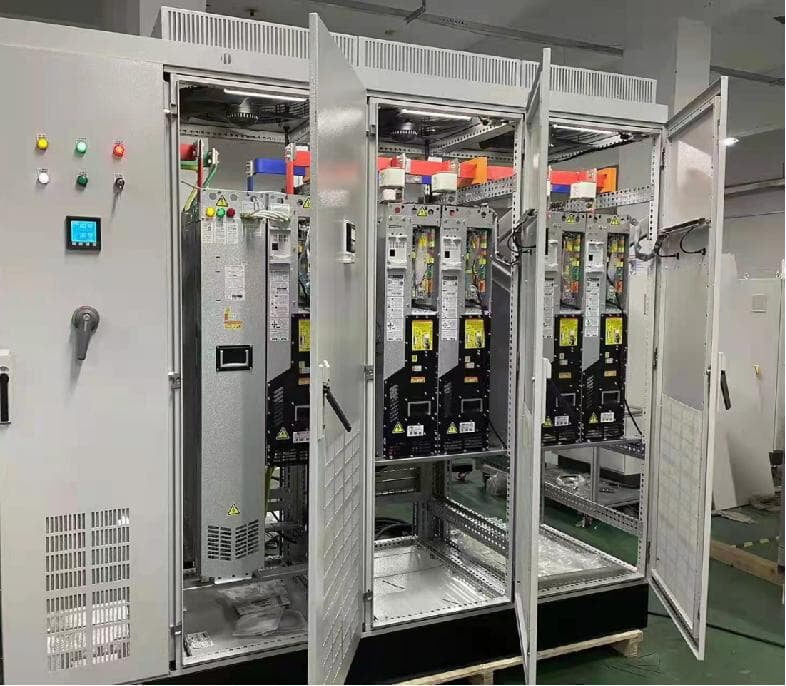
In the dynamic landscape of modern manufacturing and industrial automation, optimizing motor control is paramount for efficiency, productivity, and energy savings. Variable Frequency Drives (VFDs) are a cornerstone technology, enabling precise control over electric motors, thereby transforming operational capabilities across countless industrial sectors.
Overview
A Variable Frequency Drive (VFD), also known as an adjustable frequency drive (AFD) or inverter, is a type of motor controller that drives an electric motor by varying the frequency and voltage of its power supply. Instead of running a motor at a constant speed, a VFD allows for smooth, stepless speed control, precisely matching the motor's output to the application's demand. It works by converting incoming AC power to DC, and then inverting it back to AC, but at a variable frequency and voltage. This sophisticated process enables electric motors to operate at their most efficient point, reducing energy consumption and mechanical stress. VFDs are crucial because they offer unparalleled control over processes, improve energy efficiency, reduce wear and tear on machinery, and enhance the overall lifespan of industrial equipment. They are commonly used wherever motors drive processes that require precise speed or torque control, such as pumps, fans, conveyors, compressors, and CNC machinery in manufacturing plants, water treatment facilities, and HVAC systems.
Key Factors to Consider
1. Motor Compatibility and Load Type
The VFD must be perfectly matched to the motor's specifications, including horsepower, voltage, current, and phase. Additionally, understanding the load type—whether it's constant torque (e.g., conveyors, positive displacement pumps) or variable torque (e.g., centrifugal fans, pumps)—is critical, as it dictates the VFD's sizing, control algorithms, and necessary overload capacity for optimal performance and longevity.
2. Power Requirements and Electrical Environment
Evaluate the incoming power supply voltage, frequency, and phase (single or three-phase). Consider factors like harmonic distortion, power quality, and potential voltage sags or surges. The VFD must be able to handle these conditions, potentially requiring input reactors, harmonic filters, or other mitigation equipment to protect the drive and other sensitive electronics on the grid.
3. Control Features and Communication Protocols
Assess the necessary control capabilities such as speed accuracy, torque control, multi-motor control, and braking requirements. Modern VFDs offer advanced features like PID control, flux vector control, and integrated PLCs. Compatibility with industrial communication protocols (e.g., Modbus, Ethernet/IP, PROFINET, CANopen) is essential for seamless integration into existing automation systems and SCADA platforms.
4. Environmental Conditions
The operating environment significantly impacts VFD selection. Factors like ambient temperature, humidity, dust, vibrations, and potential exposure to corrosive chemicals or explosive atmospheres dictate the required enclosure type (e.g., NEMA 1, 12, 4X) and cooling mechanisms. Proper environmental protection ensures reliable operation and prevents premature failure.
5. Safety Features and Compliance
Prioritize VFDs with integrated safety functions such as Safe Torque Off (STO), Safe Stop 1 (SS1), and Safe Limited Speed (SLS) to meet machine safety directives and protect personnel. Ensure the VFD complies with relevant international and local standards (e.g., UL, CE, RoHS, ISO, IEC) to guarantee operational safety, regulatory acceptance, and overall system integrity.
Benefits
Energy Efficiency & Cost Savings
VFDs significantly reduce energy consumption by allowing motors to operate at speeds precisely matching process demands, unlike traditional methods that use mechanical throttling. This optimization leads to substantial savings in electricity costs, often resulting in a rapid return on investment, especially for variable torque applications like pumps and fans.
Enhanced Process Control & Precision
By providing fine-tuned control over motor speed and torque, VFDs enable superior process accuracy and repeatability. This is critical in applications requiring precise flow rates, accurate positioning, or consistent material handling, leading to higher product quality and reduced waste in complex manufacturing operations.
Reduced Mechanical Stress & Extended Equipment Life
The smooth acceleration and deceleration capabilities of VFDs eliminate the abrupt starts and stops associated with direct-on-line motors. This significantly reduces mechanical shock and stress on motors, gearboxes, belts, and other drivetrain components, thereby extending the lifespan of machinery and reducing maintenance frequency.
Improved System Diagnostics & Troubleshooting
Many VFDs come equipped with advanced diagnostic features, monitoring various operational parameters like current, voltage, temperature, and fault codes. This real-time data aids in predictive maintenance, quickly identifies potential issues, and streamlines troubleshooting, minimizing downtime and optimizing operational efficiency.
Industrial Applications
HVAC Systems (fans, chillers, pumps)
Pumps and Fans (water treatment, industrial ventilation, fluid transfer)
Conveyor Systems (material handling, logistics, assembly lines)
CNC Machines and Robotics (precision machining, automated assembly)
Textile Machinery (spinning, weaving, dyeing equipment)
Buying Guide
Before purchasing a VFD, buyers should meticulously evaluate the machine's condition, ensuring it meets industrial standards and specific application requirements. Scrutinize detailed specifications, including power ratings, input/output voltage, control methods, and environmental ratings. Always confirm the warranty coverage, understand the supplier's reputation for reliability and after-sales support, and verify the availability of genuine spare parts. Crucially, assess the VFD's compatibility with existing motors, control systems, and communication protocols to ensure seamless integration and optimal performance within your operational setup.
Maintenance Tips
Effective maintenance of VFDs is crucial for longevity and performance. Implement a robust preventive maintenance schedule that includes regular cleaning of cooling fans and heat sinks to prevent overheating. Periodically inspect wiring connections for tightness and signs of wear, and check capacitor health. Calibration of sensors and feedback loops should be performed as recommended by the manufacturer. Crucially, invest in comprehensive operator training to ensure proper understanding of VFD operation, fault identification, and routine checks, enabling proactive identification and resolution of potential issues.
Industry Trends
The evolution of VFD technology is deeply intertwined with Industry 4.0, integrating seamlessly with AI, IoT, and Smart Manufacturing ecosystems. Next-generation VFDs are becoming pivotal components in predictive maintenance strategies, leveraging embedded intelligence and connectivity to provide real-time operational data for advanced analytics. This enables proactive fault detection and optimized performance. Automation is further enhanced through VFDs, offering greater precision and adaptability, while digital twins can simulate and optimize VFD behavior within virtual environments. Sustainability remains a key driver, with VFDs contributing significantly to energy reduction goals and enabling greener manufacturing processes.