
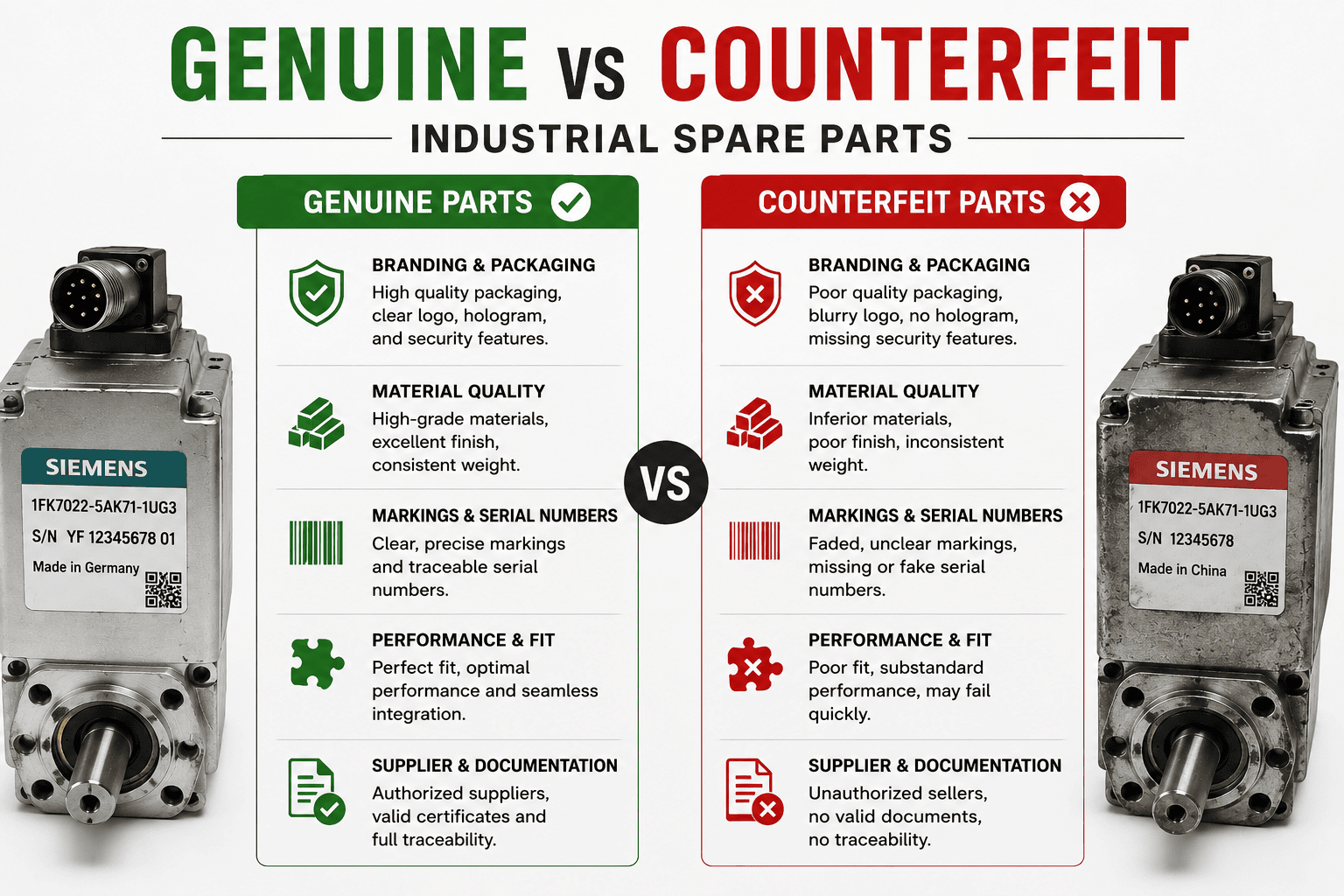
Modern manufacturing and industrial automation rely heavily on seamless machinery operation. The integrity of every component is paramount, making the ability to distinguish genuine industrial spare parts from counterfeit counterparts critical for operational excellence, ensuring safety, and safeguarding long-term investments.
Overview
Identifying genuine versus counterfeit industrial spare parts is a critical process for industries relying on precision machinery. This involves a diligent evaluation of component authenticity, scrutinizing attributes such as branding, material quality, and traceability. The process works by systematically comparing a part's characteristics against known OEM standards and documentation. Its importance lies in preventing operational failures, ensuring worker safety, and safeguarding against significant financial losses stemming from unreliable components. These spare parts are commonly used across all advanced manufacturing sectors, including SMT, semiconductor, robotics, and CNC machinery, where component integrity directly impacts productivity and product quality.
Key Factors to Consider / Key Features
Branding and Packaging
Authentic industrial spare parts feature high-quality, consistent branding, professional printing, and specific security features like holograms. Counterfeiters often use substandard materials, blurry graphics, misspelled words, or generic packaging lacking OEM hallmarks.
Material Quality and Finish
Genuine components use precise, high-grade materials and strict quality control, ensuring consistent finish, weight, and texture. Counterfeit parts often use inferior materials, leading to inconsistent finishes, rough edges, incorrect weight, or visible defects.
Part Markings and Serial Numbers
Original spare parts bear clear, indelible markings, part numbers, and traceable serial numbers, precisely engraved or etched. Counterfeit items often have poorly printed, smudged, or missing markings, inconsistent with manufacturer records.
Performance and Fit
Genuine parts guarantee precise fit and optimal performance, ensuring seamless machinery integration and functionality. Counterfeit parts frequently exhibit poor fit or fail to meet performance expectations, causing operational inefficiencies or premature failure.
Supplier Verification and Documentation
Procuring from authorized distributors or directly from the OEM is crucial. Always demand official documentation like certificates of conformity or origin, and cross-reference supplier details with the manufacturer's approved partner list for traceability.
Benefits
Enhanced Operational Reliability
Utilizing genuine industrial spare parts significantly enhances machinery reliability and longevity, minimizing unexpected breakdowns and costly production stoppages for critical SMT and semiconductor environments.
Improved Safety Standards
Authentic parts meet rigorous safety standards, reducing risks of equipment malfunction, operator injury, or catastrophic failures inherent with unpredictable counterfeit components.
Long-Term Cost Savings
Genuine parts prevent frequent replacements, reduce maintenance, and avert damage to other machine components, leading to greater long-term cost efficiency than recurring counterfeit expenses.
Preservation of Warranty and Technical Support
Using OEM parts validates your machinery's warranty and ensures access to critical technical support, firmware updates, and expert assistance, safeguarding your investment and operational continuity.
Industrial Applications
Electronics Manufacturing (SMT, PCB Assembly)
Semiconductor Equipment Fabrication
Robotics and Automation Systems
CNC Machining and Metalworking
Pharmaceutical and Medical Device Production
Buying Guide
Before purchasing industrial spare parts, buyers must thoroughly evaluate critical factors. Verify part specifications against OEM requirements, confirm supplier reputation and authorization, scrutinize warranty terms, assess genuine spare parts availability, and ensure compatibility with existing machinery to prevent operational disruptions.
Maintenance Tips
Effective maintenance practices for industrial machinery depend heavily on the quality of installed spare parts. Implementing a robust preventive maintenance schedule, encompassing regular cleaning, precise lubrication, systematic wear inspection, and periodic calibration, is crucial. Moreover, comprehensive operator training ensures correct part handling and installation, maximizing the lifespan and performance of genuine components while quickly identifying issues from substandard replacements.
Industry Trends
In the Industry 4.0 era, spare parts management is evolving with AI, IoT, and Smart Manufacturing, enhancing authenticity verification and predictive maintenance. Digital Twins offer virtual component tracking, while automation streamlines inventory. Sustainability drives demand for durable, genuine parts, emphasizing lifecycle impact and the critical need to avoid counterfeit components.
Frequently Asked Questions
What are the risks of using counterfeit industrial spare parts?
Using counterfeit industrial spare parts risks premature equipment failure, reduced operational efficiency, increased maintenance costs, safety hazards, invalidated warranties, and reputational damage due to unreliable machinery. These components compromise the integrity of industrial automation and SMT lines.
How can I verify a supplier's legitimacy for industrial spare parts?
Verify a supplier by checking if they are an authorized distributor listed on the OEM's official website. Request references, review their certifications, and ensure they provide official documentation like certificates of origin or conformity for the industrial parts supplied.
Do genuine spare parts offer a better return on investment (ROI)?
Yes. Although genuine industrial spare parts may have a higher upfront cost, their superior quality and reliability extend machine lifespan, reduce downtime, lower long-term maintenance expenses, and ensure consistent production, delivering a much greater ROI than frequent replacements of cheaper counterfeits.
Conclusion