
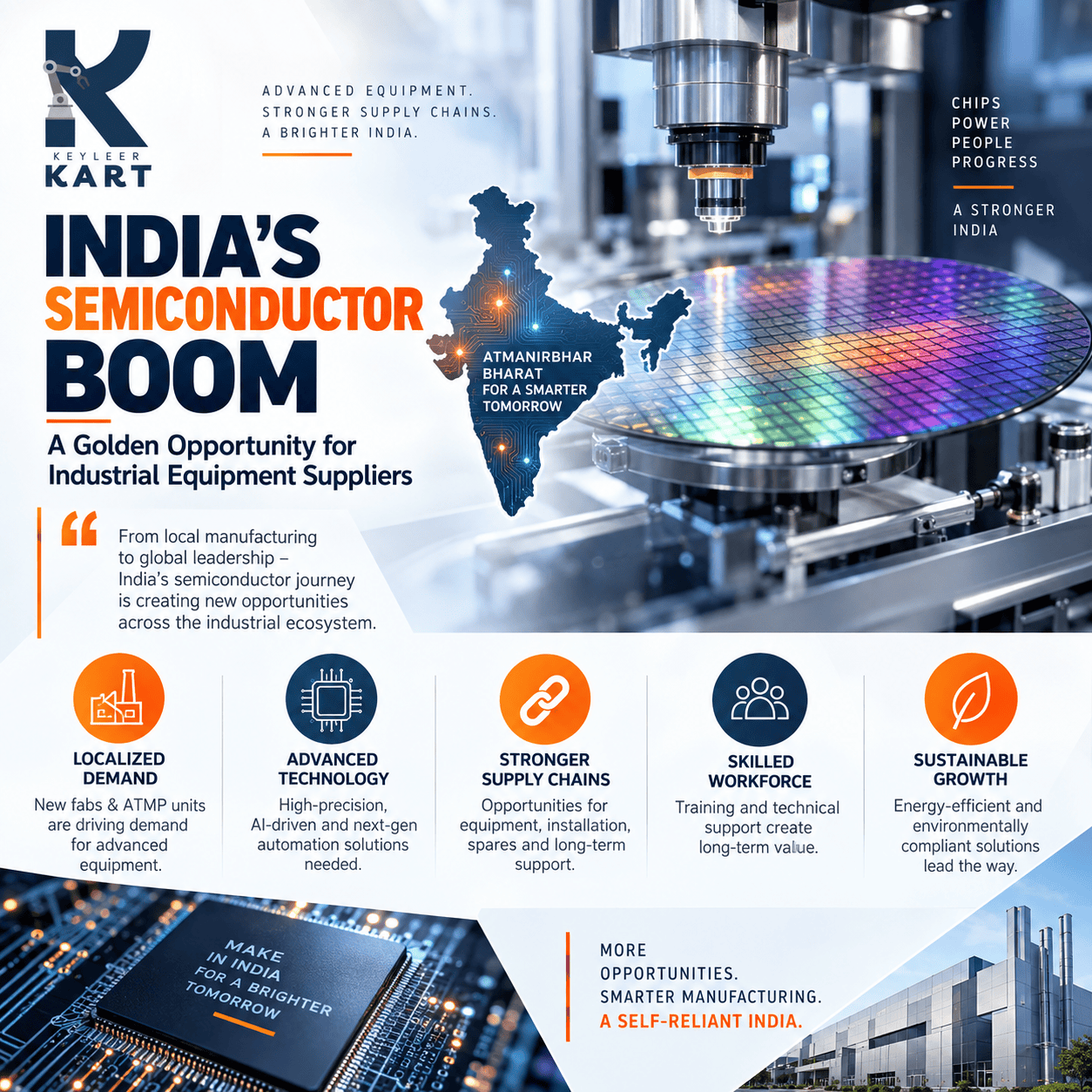
India's ambitious drive to establish a robust domestic semiconductor manufacturing ecosystem marks a pivotal shift in global electronics production. This strategic initiative not only positions India as a crucial player in the high-tech arena but also opens an unprecedented gateway for industrial equipment suppliers, demanding state-of-the-art machinery and advanced automation solutions across the manufacturing value chain.
Overview
India's semiconductor boom refers to the nation's concentrated efforts and significant investments to build capabilities for designing, fabricating, and packaging semiconductors within its borders. This encompasses setting up advanced fabrication plants (fabs), Assembly, Test, Mark, and Packaging (ATMP) facilities, and fostering a strong R&D ecosystem. The initiative is propelled by a combination of substantial government incentives, such as the Production Linked Incentive (PLI) scheme, and strategic partnerships with global industry leaders. The primary goal is to achieve self-reliance in a critical technology domain, reduce dependency on volatile global supply chains, and spur economic growth through high-value manufacturing. Semiconductor manufacturing is the bedrock of modern electronics, essential for everything from consumer devices and automotive systems to critical defense and aerospace applications. Consequently, facilities for chip design, fabrication, and packaging are emerging across various designated industrial zones and technology hubs in states like Gujarat, Uttar Pradesh, and Odisha, attracting both domestic and international investments.
Key Factors to Consider
Localized Manufacturing Demand
The establishment of new semiconductor fabrication and ATMP units within India creates a direct and immediate demand for a wide array of specialized industrial equipment, from cleanroom machinery and wafer processing tools to advanced SMT lines and robotic assembly systems, fostering localized supply chain opportunities.
Advanced Technology Requirements
India's push for cutting-edge semiconductor manufacturing necessitates equipment that embodies the latest technological advancements, including high-precision CNC machinery, advanced metrology tools, AI-driven automation, and smart factory solutions capable of handling nanoscale processes with extreme accuracy.
Robust Supply Chain Integration
Suppliers must prepare to integrate into a complex, high-stakes supply chain. This involves not only providing equipment but also offering comprehensive support, including installation, calibration, software integration, and consistent spare parts availability, often requiring local presence or strong distribution networks.
Skilled Workforce Development and Support
The demand for highly specialized equipment goes hand-in-hand with the need for a skilled workforce to operate and maintain it. Equipment suppliers who can offer robust training programs, technical support, and ongoing service agreements will be highly valued partners in India's semiconductor journey.
Sustainability and Efficiency Standards
With increasing global emphasis on sustainable manufacturing, equipment suppliers focusing on energy efficiency, reduced waste, and environmentally compliant processes will gain a significant competitive advantage. Solutions that align with green manufacturing principles are crucial for long-term success in the Indian market.
Benefits
Expanded Market Access
Industrial equipment suppliers gain access to a rapidly expanding, high-growth market, driven by significant government investment and private sector commitments, creating unprecedented sales and partnership opportunities.
Enhanced Revenue Streams
The surge in demand for specialized semiconductor manufacturing equipment, SMT lines, robotics, and factory automation solutions directly translates into substantial revenue growth opportunities for suppliers.
Catalyst for Innovation
Meeting the rigorous demands of advanced semiconductor manufacturing in India encourages suppliers to innovate, develop more precise, efficient, and intelligent equipment, driving technological advancement within their own product portfolios.
Strategic Global Positioning
By contributing to India's semiconductor ecosystem, suppliers solidify their strategic position in a critical global industry, fostering long-term relationships and expanding their international footprint beyond traditional markets.
Industrial Applications
Semiconductor Fabrication Plants (Fabs)
Assembly, Test, Mark, and Packaging (ATMP) Facilities
Electronics System Design & Manufacturing (ESDM)
Precision CNC Machining for Semiconductor Components
Cleanroom Robotics & Automated Material Handling Systems
Buying Guide
When procuring equipment for semiconductor manufacturing, buyers must meticulously evaluate machine condition, ensuring it meets the stringent cleanliness and precision requirements. Critical considerations include detailed specifications matching process needs, comprehensive warranty terms, and the supplier's reputation for reliability and post-sales support. Furthermore, assess the availability of genuine spare parts and confirm seamless compatibility with existing infrastructure and production workflows to minimize downtime and optimize operational efficiency.
Maintenance Tips
Effective maintenance of semiconductor equipment is paramount for uninterrupted production and longevity. Implement a rigorous preventive maintenance schedule, including regular cleaning of sensitive components, precise lubrication of moving parts, and periodic inspection for wear and tear. Critical equipment, especially metrology and lithography tools, requires frequent calibration. Invest in comprehensive operator training to ensure correct handling and proactive identification of potential issues, minimizing costly repairs and optimizing uptime.
Industry Trends
India's semiconductor boom is deeply intertwined with Industry 4.0 paradigms. The adoption of AI and IoT is revolutionizing factory automation, enabling smart manufacturing environments with predictive maintenance capabilities to minimize downtime. Digital twins simulate entire production lines for optimization, while advanced robotics handle delicate components in cleanroom settings. A strong emphasis on sustainability drives demand for energy-efficient equipment and processes, aligning India's manufacturing prowess with global environmental goals.
Frequently Asked Questions
What government policies are driving India's semiconductor boom?
India's semiconductor boom is primarily driven by robust government policies such as the India Semiconductor Mission (ISM) and the Production Linked Incentive (PLI) scheme for semiconductors and display manufacturing. These policies offer significant financial incentives, capital expenditure support, and an attractive policy framework to encourage both domestic and foreign companies to establish manufacturing units and R&D facilities within the country, aiming to create a self-reliant semiconductor ecosystem.
What types of industrial equipment are most in demand?
With the rise of semiconductor manufacturing in India, there is a high demand for specialized industrial equipment including advanced wafer fabrication tools (e.g., lithography, etching, deposition systems), precision CNC machinery for component manufacturing, high-speed SMT equipment for PCB assembly, cleanroom robotics, automated material handling systems (AMHS), sophisticated metrology and inspection tools, and advanced packaging and testing equipment for ATMP facilities.
How can foreign equipment suppliers enter the Indian market effectively?
Foreign equipment suppliers can effectively enter the Indian market by establishing strong local partnerships, understanding specific Indian market requirements and regulatory frameworks, offering competitive pricing with comprehensive after-sales service, and providing technical training to the local workforce. Direct investment, joint ventures, and establishing local service centers are also crucial strategies to build trust and ensure long-term market penetration in India's burgeoning semiconductor sector.



