
In the high-speed world of modern manufacturing and industrial automation, the reliability of robotic systems is paramount. Fanuc robots, known for their precision and durability, are cornerstones in countless production lines. Implementing a robust preventive maintenance checklist for these sophisticated machines is not merely a best practice; it is a critical strategy to ensure continuous operation, safeguard investment, and maintain competitive advantage.
Overview
Fanuc robots are advanced, multi-axis industrial robotic arms designed for a wide array of automated tasks. These machines function by executing precisely programmed movements, guided by sophisticated controllers and motors, to manipulate tools or workpieces with extreme accuracy and repeatability. Their importance stems from their ability to significantly enhance productivity, improve product quality, reduce operational costs, and perform hazardous tasks safely, thereby optimizing labor utilization. Fanuc robots are extensively used across industries such such as automotive manufacturing, electronics assembly (including SMT and PCB processes), semiconductor fabrication, metal processing, packaging, and general material handling applications.
Key Factors to Consider
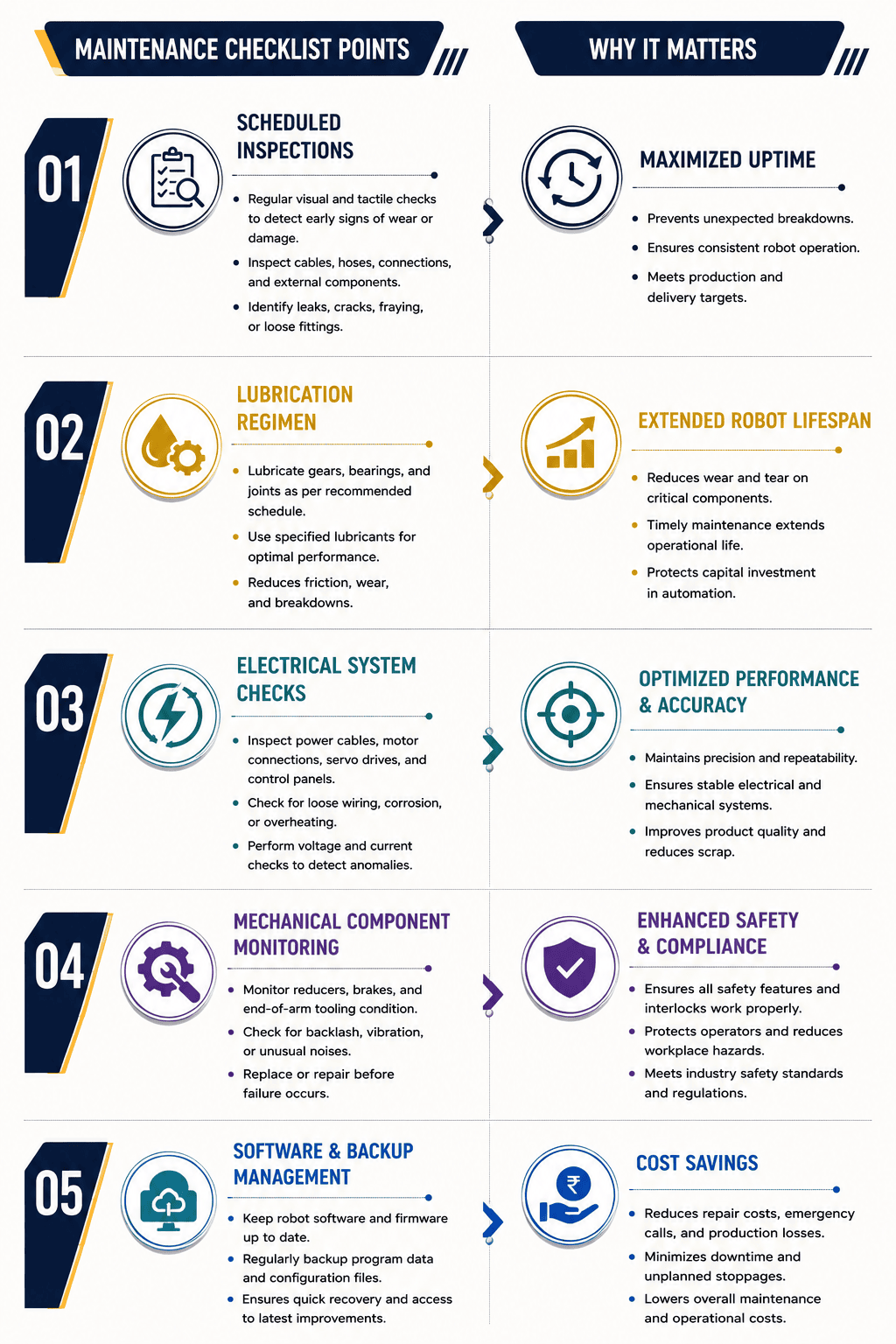
Scheduled Inspections
Regular visual and tactile inspections are crucial for identifying early signs of wear, damage, or misalignment. This includes checking cables, hoses, connections, and external components for fraying, leaks, cracks, or loose fittings that could lead to unexpected failures and costly downtime.
Lubrication Regimen
Proper lubrication of gears, bearings, and moving joints is vital for reducing friction, minimizing wear, and ensuring smooth, accurate robot movement. Adhering to Fanuc's recommended lubrication schedules and using the specified lubricants prevents premature component failure and maintains optimal performance.
Electrical System Checks
The electrical integrity of a Fanuc robot is fundamental to its operation. This involves inspecting power cables, motor connections, servo drives, and control panels for loose wiring, corrosion, or signs of overheating. Regular voltage and current checks can detect anomalies before they escalate into major electrical faults.
Mechanical Component Monitoring
Monitoring the condition of mechanical components like reducers, brakes, and end-of-arm tooling is essential. Regular checks for excessive backlash, vibration, or unusual noises can indicate impending mechanical issues, allowing for proactive repair or replacement before they cause operational disruption.
Software & Backup Management
Maintaining up-to-date robot software, firmware, and regularly backing up critical program data and configuration files are preventive measures against software-related failures. This ensures quick recovery in case of system corruption and allows for seamless updates that might include performance enhancements or bug fixes.
Benefits
Maximized Uptime
By proactively addressing potential issues, preventive maintenance significantly reduces the likelihood of unplanned breakdowns, ensuring that Fanuc robots operate consistently and maximize production uptime, directly contributing to output targets and delivery schedules.
Extended Robot Lifespan
Consistent care, proper lubrication, and timely replacement of worn components greatly diminish wear and tear, thereby extending the operational lifespan of the Fanuc robot. This protects the significant capital investment in automation equipment.
Optimized Performance & Accuracy
Well-maintained robots perform with greater precision and repeatability. Preventive maintenance ensures that mechanical tolerances are upheld, electrical systems are stable, and software operates flawlessly, leading to consistent product quality and reduced scrap rates in electronics manufacturing and other precision industries.
Enhanced Safety & Compliance
Regular maintenance checks help ensure that all safety features, emergency stops, and interlocks are functioning correctly. This not only protects operators and other personnel but also ensures compliance with industry safety standards and regulations, minimizing workplace hazards.
Industrial Applications
Automotive Manufacturing
Electronics Assembly & SMT
Semiconductor Fabrication
Metal Processing & Welding
Logistics & Material Handling
Buying Guide
When evaluating industrial robotics solutions, prospective buyers should thoroughly assess the machine's overall condition, ensuring it meets specified operational requirements and safety standards. Critical factors include detailed specifications, the availability and scope of a warranty, the supplier's reputation for support and service, the easy access to spare parts, and seamless compatibility with existing production lines and automation infrastructure.
Maintenance Tips
Effective robot maintenance hinges on a structured approach encompassing regular preventive maintenance schedules, meticulous cleaning to prevent contamination, precise lubrication of all moving parts, routine inspection of critical components, periodic calibration to maintain accuracy, and ongoing operator training to ensure correct usage and early detection of potential issues.
Industry Trends
The landscape of industrial automation is rapidly evolving, driven by Industry 4.0, integrating Artificial Intelligence (AI) and the Internet of Things (IoT) to foster Smart Manufacturing environments. This shift emphasizes Predictive Maintenance, leveraging data analytics to anticipate equipment failures before they occur. The trend towards greater Automation and the use of Digital Twins for virtual simulation and optimization further enhances efficiency, while sustainability initiatives increasingly guide equipment selection and operational practices.
Frequently Asked Questions
What is the primary purpose of Fanuc robot preventive maintenance?
The primary purpose of Fanuc robot preventive maintenance is to proactively identify and address potential issues before they lead to costly breakdowns and production downtime. It ensures the robot operates reliably, maintains peak performance and accuracy, extends its overall service life, and upholds safety standards within the manufacturing environment.
How often should a Fanuc robot undergo preventive maintenance?
The frequency of Fanuc robot preventive maintenance depends on several factors, including the robot's model, operational hours, application intensity, and environmental conditions. Generally, Fanuc provides manufacturer-recommended schedules, often involving daily visual checks, monthly or quarterly minor inspections, and annual or bi-annual major service intervals. Adhering to these guidelines is crucial for optimal functioning.
Can preventive maintenance improve the ROI of a Fanuc robot?
Absolutely. By minimizing unexpected downtime, reducing repair costs, extending the robot's operational lifespan, and ensuring consistent product quality, preventive maintenance directly contributes to a higher return on investment (ROI). It safeguards the capital expenditure, optimizes operational efficiency, and ensures continuous value generation from the automation asset.