
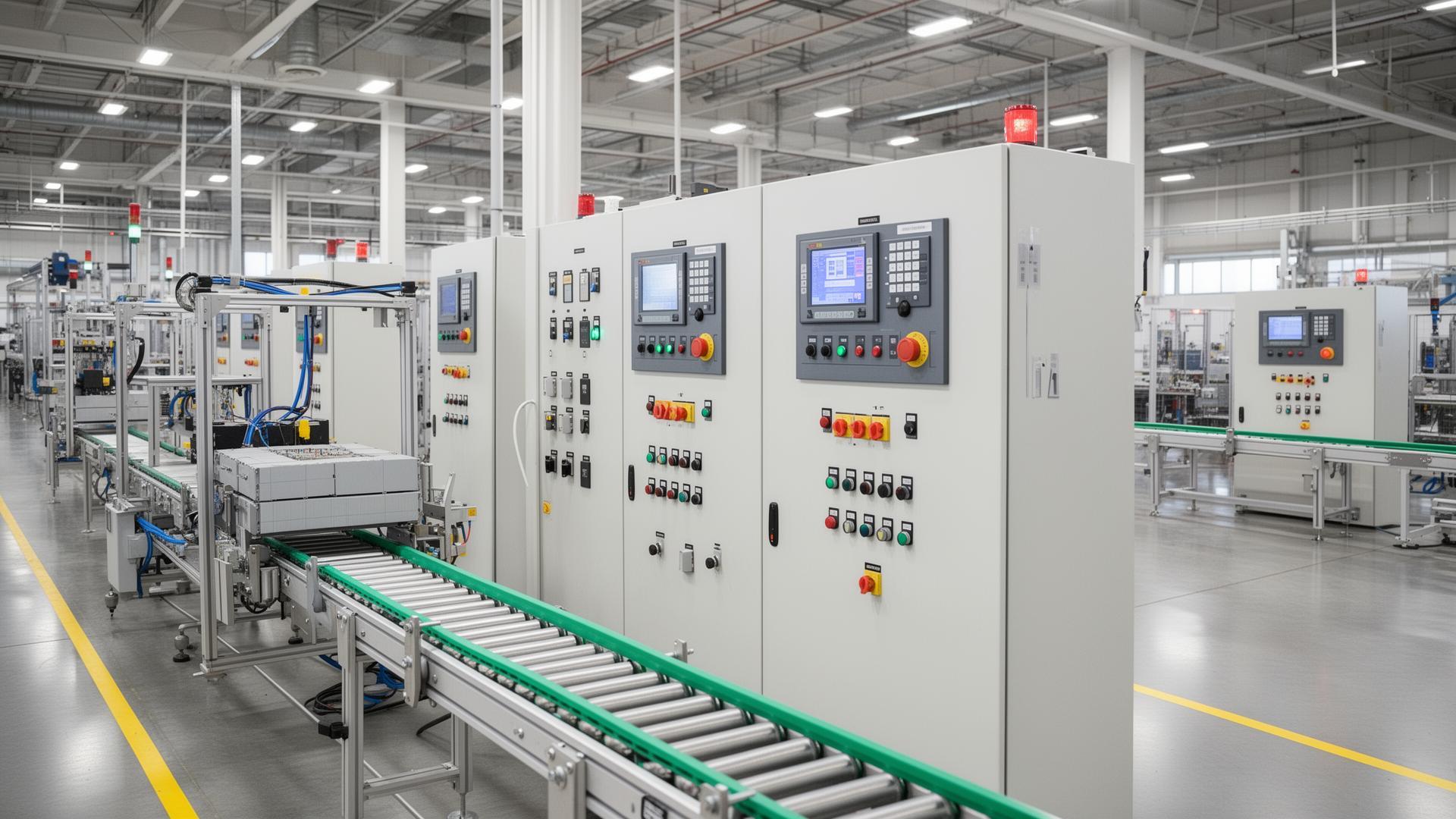
In the intricate world of modern manufacturing and industrial automation, the precise control of electric motors is paramount. From simple on/off switching to sophisticated speed and torque management, robust motor control components are the backbone of efficient, reliable, and safe operational systems. Understanding these fundamental devices is crucial for engineers, plant managers, and procurement specialists aiming to optimize factory automation and electronics manufacturing processes.
Overview
Motor control components are essential devices used to manage the operation of electric motors, which drive countless machines in industrial settings. This article focuses on three primary categories: contactors, relays, and Variable Frequency Drives (VFDs). Contactors are heavy-duty electrical switches designed for high-current applications, primarily used for switching power circuits, often controlling electric motors, lighting, heating, and capacitor banks. They work by using a control voltage to energize an electromagnetic coil, which then closes or opens a set of main contacts, allowing or interrupting the flow of power to the motor. Relays, similar in principle but typically designed for lower current applications, act as an electrical switch controlled by an electromagnet, commonly used in control circuits to switch auxiliary circuits or provide logical control signals to other components. They work by responding to a small electrical current to switch a larger current, providing isolation between control and power circuits. Variable Frequency Drives (VFDs), also known as Adjustable Speed Drives (ASDs), are sophisticated power electronics devices that control the speed and torque of AC motors by varying the motor's frequency and voltage. A VFD rectifies incoming AC power to DC, then inverts it back to AC at a desired frequency and voltage. These components are vital because they enable precise motor operation, protect motors from damage, enhance energy efficiency, and contribute to overall system stability and safety. They are commonly used across virtually all industrial sectors, from SMT lines and robotics to semiconductor fabrication, CNC machining, and heavy industrial machinery.
Key Factors to Consider
1. Current and Voltage Ratings
Contactors and relays are specified by their current and voltage handling capabilities. Matching these ratings to the motor's full load current and the system's supply voltage is critical to prevent overheating, premature failure, and ensure safe operation. VFDs also have specific input and output voltage/current ranges that must align with the motor and power supply.
2. Control Circuit Compatibility
Relays are integral for logical control, often interfacing between low-power PLCs or microcontrollers and higher-power contactors. Ensuring the control voltage and current requirements of these components are compatible with the automation system's outputs is essential for seamless integration and reliable operation within complex industrial setups.
3. Motor Type and Application
While contactors and relays are broadly applicable, VFDs are specifically designed for AC motors (induction or synchronous). Understanding the motor type (e.g., single-phase, three-phase, servo) and the application's demands (e.g., constant speed, variable speed, soft start/stop, regenerative braking) will dictate the appropriate motor control solution.
4. Environmental Conditions and Enclosure Ratings
Industrial environments can be harsh, involving dust, moisture, extreme temperatures, or corrosive agents. Selecting components with appropriate Ingress Protection (IP) ratings and robust enclosures (e.g., NEMA standards) is crucial for longevity, reliability, and safety in challenging factory settings, semiconductor cleanrooms, or outdoor applications.
5. Advanced VFD Features and Functionality
Modern VFDs offer a range of advanced features such as sensorless vector control, PID control, network communication protocols (e.g., EtherCAT, PROFINET), energy monitoring, and built-in safety functions. Evaluating these functionalities against process requirements and integration with existing Industry 4.0 infrastructure is vital for optimizing performance and future-proofing systems.
Benefits
Enhanced Motor Protection
Contactors and relays often integrate overload protection, safeguarding motors from excessive current and preventing costly damage or downtime. VFDs provide comprehensive motor protection, including overcurrent, overvoltage, undervoltage, and thermal overload, extending motor lifespan and reducing maintenance.
Improved Energy Efficiency
VFDs significantly reduce energy consumption by precisely matching motor speed to load demand, eliminating the fixed-speed operation of traditional systems. This translates to substantial energy savings, lower operating costs, and a reduced carbon footprint for industrial facilities.
Precise Process Control
With VFDs, operations requiring variable speed or torque can achieve superior accuracy and repeatability, crucial for applications like conveyor systems, pumps, fans, and winding machines. Relays provide accurate control logic for sequence operations, ensuring precise coordination in automated systems.
Increased System Reliability and Uptime
By preventing motor damage, enabling soft starts, and offering diagnostic capabilities, these control components contribute to greater operational stability. Reduced wear and tear on mechanical components and fewer unexpected failures lead to higher uptime and productivity across manufacturing lines.
Industrial Applications
Semiconductor Manufacturing Equipment
SMT (Surface Mount Technology) Assembly Lines
Robotics and Automation Cells
CNC Machinery and Metal Fabrication
Electronics Manufacturing and PCB Assembly
Buying Guide
When procuring motor control components, buyers should thoroughly evaluate several key aspects: the condition of the equipment, whether new or refurbished; detailed specifications to ensure compatibility with existing systems and performance requirements; the availability and terms of warranty for peace of mind; the reputation and reliability of the supplier; access to genuine spare parts for long-term support; and overall compatibility with your current machinery, control systems, and future expansion plans, particularly concerning communication protocols for VFDs.
Maintenance Tips
Effective maintenance of motor control components involves a proactive approach. Implement a preventive maintenance schedule that includes regular cleaning to prevent dust and debris buildup, especially around contactors and VFD cooling fins. Ensure proper lubrication of moving parts where applicable, conduct routine inspections for signs of wear, loose connections, or heat discoloration. Calibrate VFDs and associated sensors periodically to maintain accuracy, and invest in ongoing operator training to ensure correct usage and early fault detection, thereby maximizing operational lifespan and minimizing unexpected downtime.
Industry Trends
The landscape of motor control is rapidly evolving with Industry 4.0 principles. Integration of AI and IoT capabilities into VFDs is enabling smart manufacturing environments with advanced diagnostics and predictive maintenance functionalities. Digital Twins are being used for virtual commissioning and optimization of motor control systems, enhancing efficiency and reducing risk. Sustainability remains a key driver, pushing for more energy-efficient VFDs and components that contribute to a lower environmental footprint. Automation, driven by sophisticated control architectures, continues to enhance precision and productivity across all industrial sectors.
Frequently Asked Questions
What is the primary difference between a contactor and a relay?
The primary difference lies in their application and current handling capacity. Contactors are designed for switching high-power circuits, typically controlling motors and large loads, and feature heavy-duty contacts. Relays, on the other hand, are generally used in lower-power control circuits to switch auxiliary contacts, provide electrical isolation, or trigger larger contactors or other control devices.
How do VFDs contribute to energy savings in industrial applications?
VFDs contribute to significant energy savings by allowing AC motors to operate at variable speeds. In many applications like pumps and fans, reducing motor speed by even a small percentage drastically reduces power consumption (often proportional to the cube of the speed reduction). Unlike traditional fixed-speed operations that may use throttling mechanisms, VFDs precisely match the motor's output to the actual load demand, eliminating wasted energy and optimizing efficiency.
Can contactors and relays be used for safety functions in automation?
Yes, both contactors and relays play critical roles in safety functions within industrial automation. Safety relays are specifically designed to monitor safety devices (e.g., emergency stop buttons, light curtains) and initiate a safe state, such as cutting power to hazardous machinery via safety-rated contactors. They ensure redundant and fail-safe operation, compliant with international safety standards, making them indispensable for protecting personnel and equipment.
Conclusion
Motor control components like contactors, relays, and Variable Frequency Drives are indispensable elements that underpin the efficiency, safety, and precision of modern industrial operations. From fundamental power switching to sophisticated speed and torque management, these devices enable robust automation, enhance energy savings, and protect vital machinery across diverse sectors, including SMT, robotics, and semiconductor manufacturing. Mastering their selection, integration, and maintenance is crucial for any enterprise striving for operational excellence in the Industry 4.0 era. For cutting-edge industrial solutions tailored to your specific needs, contact KeyLeer Kart today.