
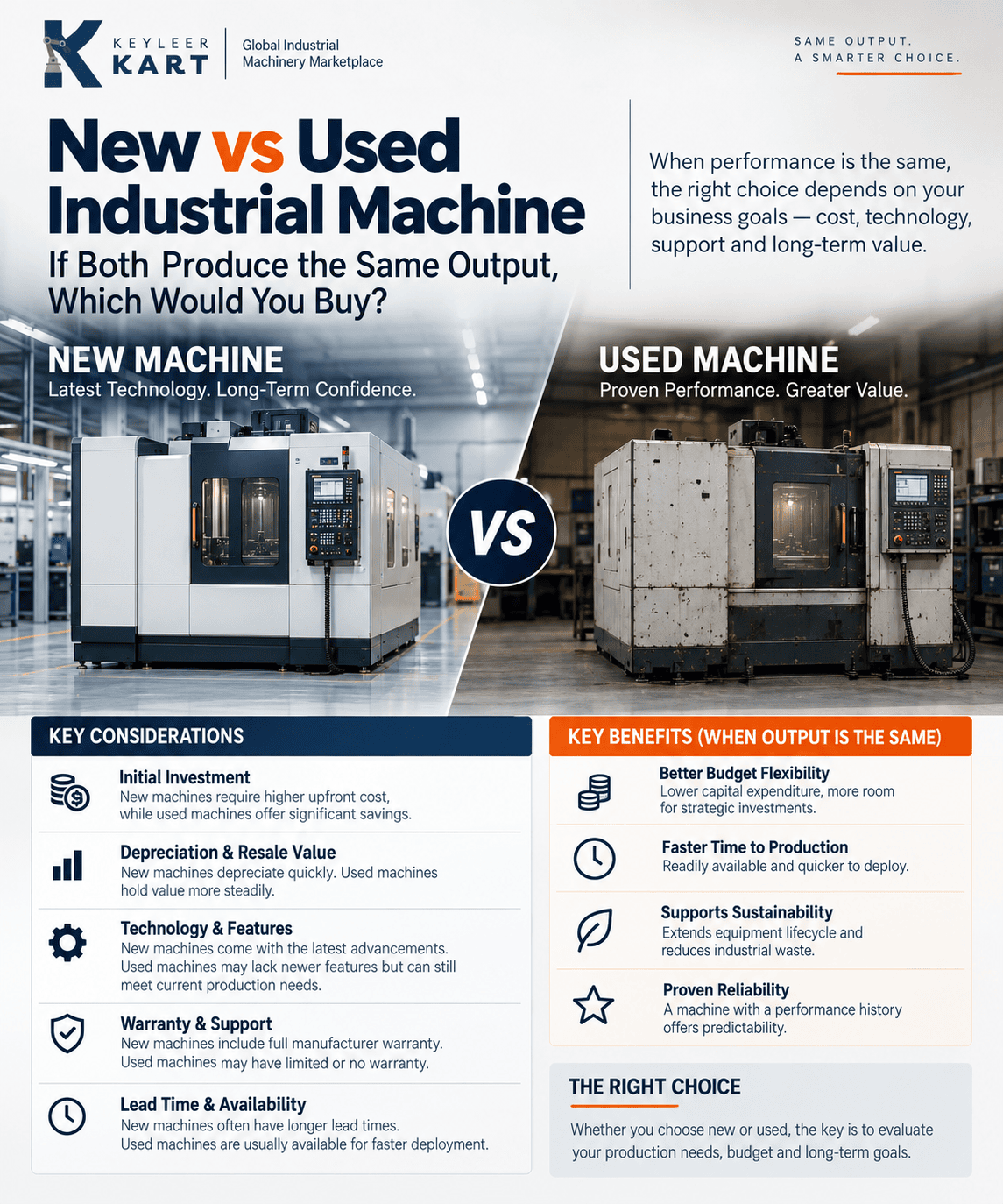
In the dynamic landscape of modern manufacturing and industrial automation, the strategic procurement of equipment is a cornerstone of operational success. Choosing between a new and a used industrial machine, especially when both promise identical output metrics, presents a critical decision point for businesses aiming to optimize capital expenditure, maintain competitive edge, and ensure long-term operational resilience.
Overview
The decision of acquiring an industrial machine – be it for SMT, robotics, CNC machining, or semiconductor manufacturing – often boils down to a fundamental choice between a brand-new unit and a pre-owned, refurbished, or used one. This dilemma is particularly sharp when both options are capable of delivering the same specified output, quality, and cycle time. The core technology, whether it's an automated pick-and-place system, a precision CNC mill, or a robotic assembly cell, functions by executing programmed tasks to transform raw materials into finished goods or perform specific manufacturing processes. Its importance lies in enabling efficient, consistent, and scalable production, reducing manual labor, improving accuracy, and enhancing overall throughput. Such machinery is indispensable across virtually every sector of electronics manufacturing, automotive, aerospace, medical device production, and general industrial fabrication, serving as the backbone of modern factory automation.
Key Factors to Consider
1. Initial Capital Investment
While both new and used machines might deliver the same output, the upfront cost difference is typically significant. New machines demand a higher capital outlay but come with the latest technology and full manufacturer warranties, whereas used equipment offers substantial cost savings, freeing up capital for other investments or operational expenses.
2. Depreciation and Resale Value
New industrial machinery depreciates rapidly in its initial years, similar to a new vehicle. Used machines, having already undergone their steepest depreciation curve, tend to hold their value more consistently over time, potentially offering a better long-term asset value retention and higher resale potential relative to their purchase price.
3. Technology and Feature Set
New machines inherently incorporate the latest technological advancements, software integrations, and energy efficiency improvements, aligning seamlessly with Industry 4.0 initiatives. Used machines, while capable of current output, may lack cutting-edge features, advanced diagnostics, or seamless connectivity, potentially requiring upgrades or workarounds to integrate into a smart manufacturing ecosystem.
4. Warranty and Support
A new machine typically includes a comprehensive manufacturer's warranty, guaranteeing parts and labor for a specified period, along with direct access to OEM technical support. Used machines may come with a limited dealer warranty, an "as-is" condition, or no warranty at all, shifting the burden of potential repair costs and troubleshooting onto the buyer.
5. Lead Time and Availability
New machinery can often have extended lead times due due to manufacturing queues, customization, or shipping. Used equipment, especially from reputable dealers, can often be acquired and deployed much faster, providing a quicker solution for immediate production needs or rapid expansion projects without significant waiting periods.
Benefits
Enhanced Budget Flexibility
Opting for a used machine when output parity exists allows businesses to significantly reduce initial capital expenditure, preserving cash flow for other strategic investments, R&D, or expanding production lines.
Faster Time to Production
Pre-owned industrial equipment is often readily available, eliminating the lengthy lead times associated with new machine fabrication and delivery, thereby enabling quicker deployment and faster commencement of production.
Reduced Environmental Footprint
Purchasing used machinery contributes to sustainability by extending the lifecycle of existing equipment, reducing demand for new manufacturing resources, and minimizing industrial waste, aligning with green manufacturing principles.
Proven Performance Track Record
A used machine that has consistently delivered specified output in its previous application demonstrates a proven operational history, offering a degree of reliability and performance predictability, especially if well-maintained.
Industrial Applications
Electronics Manufacturing & PCB Assembly
Semiconductor Equipment & Wafer Fabrication
Automotive Component Manufacturing
Aerospace & Defense Precision Machining
Medical Device Production & Cleanroom Assembly
Buying Guide
Before committing to an industrial machine, buyers must meticulously evaluate several critical aspects regardless of whether it's new or used. Key considerations include thoroughly assessing the machine's condition, verifying its specifications against current production needs, understanding the terms of any available warranty, scrutinizing the supplier's reputation for reliability, ensuring the availability of spare parts, and confirming seamless compatibility with existing factory automation systems and software protocols.
Maintenance Tips
Effective maintenance is paramount for maximizing machine lifespan and ensuring consistent output. Establish a robust preventive maintenance schedule, which includes regular cleaning of all components, proper lubrication of moving parts, routine inspection for wear and tear, precise calibration of sensors and actuators, and comprehensive operator training to ensure correct usage and early detection of potential issues, all contributing to optimal performance and reduced downtime.
Industry Trends
The industrial machinery market is rapidly evolving, driven by Industry 4.0 paradigms. Integration of Artificial Intelligence (AI) and Internet of Things (IoT) sensors is enabling smart manufacturing environments, facilitating predictive maintenance to anticipate failures before they occur. Automation and robotics continue to enhance efficiency, while digital twins offer virtual commissioning and real-time monitoring. Furthermore, sustainability is becoming a key driver, influencing design for energy efficiency and extended equipment lifecycles, whether new or used.
Frequently Asked Questions
What due diligence is required for buying a used industrial machine?
When buying used, conduct thorough on-site inspections, request detailed service records, verify operational history, run test parts to confirm output quality, and consult with a third-party expert for an independent appraisal of condition and functionality. Always ensure clear ownership and transfer of intellectual property rights for any associated software.
How does the decision impact return on investment (ROI)?
The ROI calculation for new versus used machines differs significantly. A new machine might offer higher long-term efficiency and lower maintenance costs, but its higher initial investment prolongs the payback period. A used machine, with lower upfront costs, can achieve a faster ROI, provided its maintenance and operational costs don't unexpectedly escalate.
Can a used machine be integrated into an Industry 4.0 ecosystem?
Yes, many used machines can be retrofitted with IoT sensors, edge computing devices, and connectivity modules to enable data collection, remote monitoring, and integration into a smart factory network. While they may not have native Industry 4.0 capabilities, strategic upgrades can bridge the gap and leverage existing assets for digital transformation initiatives.



