
Introduction
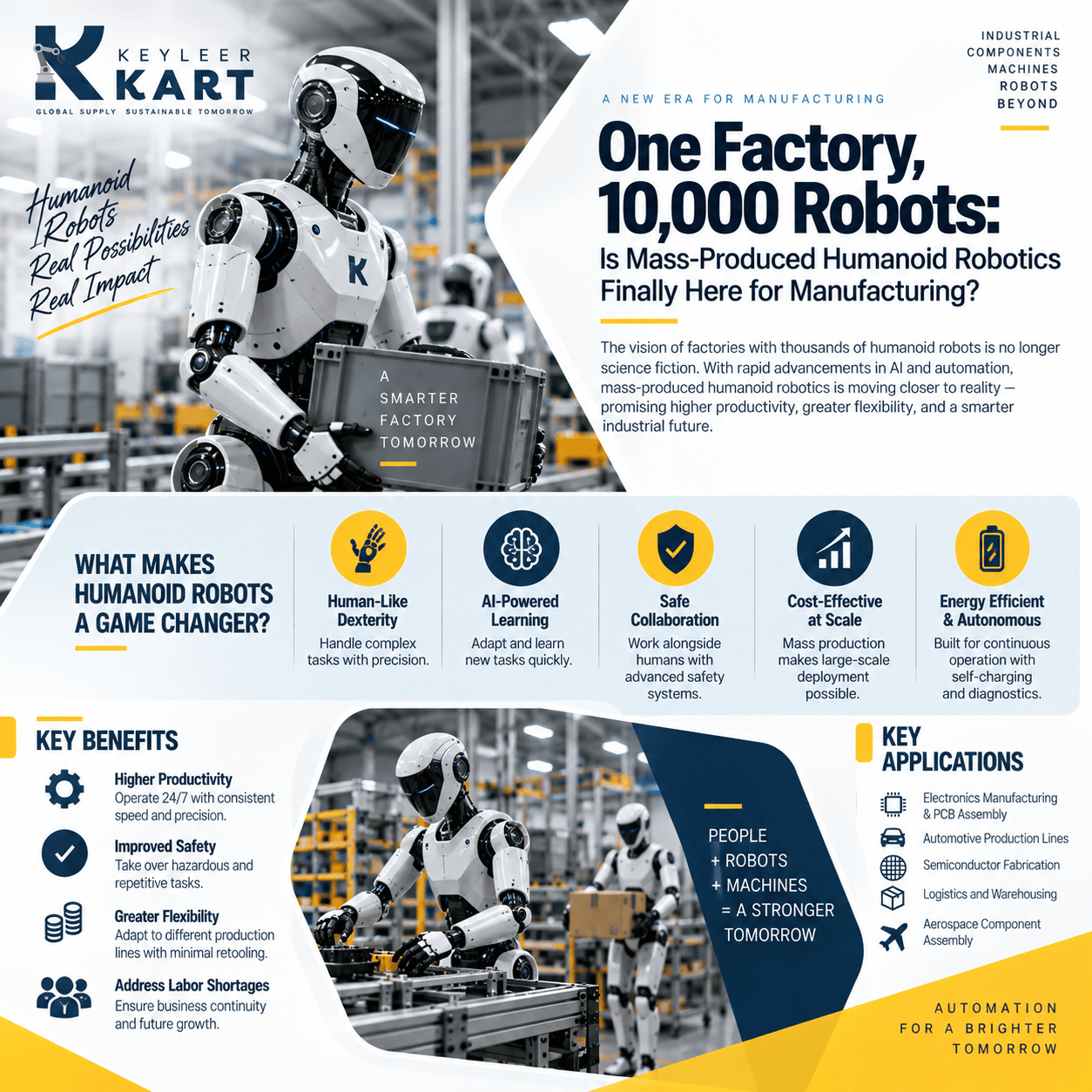
The vision of factories operating with vast fleets of autonomous robots has long been a staple of science fiction, but with significant advancements in AI, robotics, and automation, mass-produced humanoid robotics is rapidly moving from concept to reality. This paradigm shift holds immense importance for modern manufacturing and industrial automation, promising to revolutionize efficiency, flexibility, and operational capabilities across various sectors.
Overview
Mass-produced humanoid robotics refers to the scalable manufacturing and deployment of robots designed to mimic human form and movement, enabling them to perform complex tasks in environments originally configured for human workers. Unlike traditional industrial robots, which are often fixed-arm or specialized machines, humanoids offer unparalleled versatility due to their bipedal locomotion, dexterous manipulators, and ability to navigate dynamic, unstructured spaces. They operate by integrating advanced sensor suites, powerful AI algorithms for perception and decision-making, and sophisticated control systems that allow them to learn, adapt, and interact safely within human-centric workplaces. This technology is critical because it addresses persistent challenges such as labor shortages, demand for higher precision, and the need for greater operational flexibility, particularly in hazardous or repetitive tasks. While still emerging, these robots are poised for widespread adoption in areas like electronics manufacturing, automotive assembly, logistics, and semiconductor equipment production, where adaptability and intricate manipulation are paramount.
Key Factors to Consider / Key Features
Dexterity and Manipulation
Humanoid robots are engineered with multi-fingered hands and highly articulated arms, providing the dexterity necessary to grasp, manipulate, and assemble a diverse range of components, from delicate PCB elements in SMT lines to larger automotive parts, making them adaptable for intricate manufacturing tasks.
AI and Learning Capabilities
Leveraging advanced artificial intelligence and machine learning, these robots can learn new tasks through demonstration, adapt to unforeseen environmental changes, and continuously optimize their performance. This capability significantly reduces programming time and enhances their utility in dynamic industrial settings.
Safety Protocols and Human-Robot Interaction (HRI)
Equipped with sophisticated sensor arrays and robust safety algorithms, mass-produced humanoids prioritize human-robot interaction. Features like collision avoidance, force-limited movements, and easy-to-understand communication ensure safe operation alongside human co-workers, which is crucial for collaborative manufacturing environments.
Cost-Effectiveness and Scalability
The 'mass-produced' aspect signifies a focus on reducing unit costs through efficient manufacturing processes, making large-scale deployment economically viable. This scalability allows factories to rapidly expand their robotic workforce to meet fluctuating production demands without prohibitive capital expenditure.
Energy Efficiency and Autonomy
Designed for extended operational periods, modern humanoid robots incorporate energy-efficient designs and advanced battery management systems. Features like autonomous charging and self-diagnostic capabilities ensure minimal downtime and continuous productivity in automated factories.
Benefits
Enhanced Operational Efficiency
Humanoid robots can operate 24/7 without fatigue, consistently maintaining high levels of precision and speed, which significantly boosts production throughput and overall factory efficiency in sectors like electronics manufacturing and CNC machinery operations.
Improved Safety in Hazardous Environments
By taking over tasks in dangerous, repetitive, or physically demanding environments, these robots mitigate risks to human workers, reducing workplace accidents and enhancing safety standards in semiconductor cleanrooms or chemical processing plants.
Increased Production Flexibility
Their human-like form and versatility allow humanoid robots to adapt quickly to different production lines and tasks with minimal retooling. This flexibility is invaluable for manufacturers dealing with diverse product portfolios and rapidly changing market demands, especially in SMT and PCB assembly.
Addressing Labor Shortages
With global skilled labor shortages becoming more pronounced, humanoid robots offer a sustainable solution to fill critical roles, ensuring continuity and growth for industries reliant on complex manual labor, from precision assembly to quality inspection.
Industrial Applications
Electronics Manufacturing & PCB Assembly
Automotive Production Lines
Semiconductor Fabrication
Logistics and Warehousing
Aerospace Component Assembly
Buying Guide
When considering the acquisition of mass-produced humanoid robotics, buyers must meticulously evaluate several critical factors. Prioritize assessing the machine condition, whether new or used, and thoroughly review detailed technical specifications to ensure alignment with operational requirements. Always confirm the warranty coverage for peace of mind and scrutinize the supplier reputation for reliability and after-sales support. Furthermore, investigate the availability and cost of spare parts, and verify the robot's compatibility with your existing industrial automation infrastructure and software systems for seamless integration.
Maintenance Tips
To ensure optimal performance and longevity of humanoid robots, a robust maintenance strategy is essential. Implement a schedule for preventive maintenance, including regular cleaning of external surfaces and sensors to prevent debris accumulation. Ensure proper lubrication of all moving joints and actuators according to manufacturer guidelines. Conduct frequent inspections for wear and tear, loose connections, or damage, and perform periodic calibration of sensors and manipulators to maintain precision. Crucially, invest in comprehensive operator training to empower your team to handle routine checks, troubleshoot minor issues, and operate the robots safely and efficiently.
Industry Trends
The advent of mass-produced humanoid robotics is deeply intertwined with broader Industry 4.0 trends. Integration with AI and IoT enables these robots to become intelligent, connected entities within smart manufacturing ecosystems. This facilitates predictive maintenance through real-time data analysis, enhancing uptime and efficiency. Digital twins can simulate robot operations and optimize performance before physical deployment. Ultimately, this move towards advanced automation, coupled with a focus on sustainability through optimized resource use and reduced waste, positions humanoid robots as a cornerstone of the next generation of highly adaptive and resilient factories.
Frequently Asked Questions
Are humanoid robots truly ready for mass production in factories?
While still maturing, the technology for mass-produced humanoid robotics is rapidly advancing, with several companies now demonstrating capabilities beyond prototypes. Key breakthroughs in cost reduction, AI learning, and robust hardware are paving the way for scalable deployment, particularly in repetitive and labor-intensive industrial automation tasks. Full-scale adoption across all manufacturing sectors is anticipated within the next decade.
What specific tasks can humanoid robots perform in an industrial setting?
In an industrial setting, humanoid robots are adept at a wide array of tasks including intricate assembly (e.g., PCB components, electronic devices), quality inspection, material handling and logistics within warehouses, operating CNC machinery, and performing dangerous tasks like welding or operating in cleanrooms for semiconductor equipment. Their dexterity allows them to interact with tools and interfaces designed for humans.
How do humanoid robots integrate with existing automation systems?
Modern humanoid robots are designed for interoperability, utilizing standard communication protocols and APIs to integrate seamlessly with existing factory automation systems, ERP software, and SCADA systems. Their ability to work in human-centric environments also means they can often be deployed without extensive re-engineering of the factory layout, complementing existing robotic and SMT equipment rather than requiring full replacement.



