
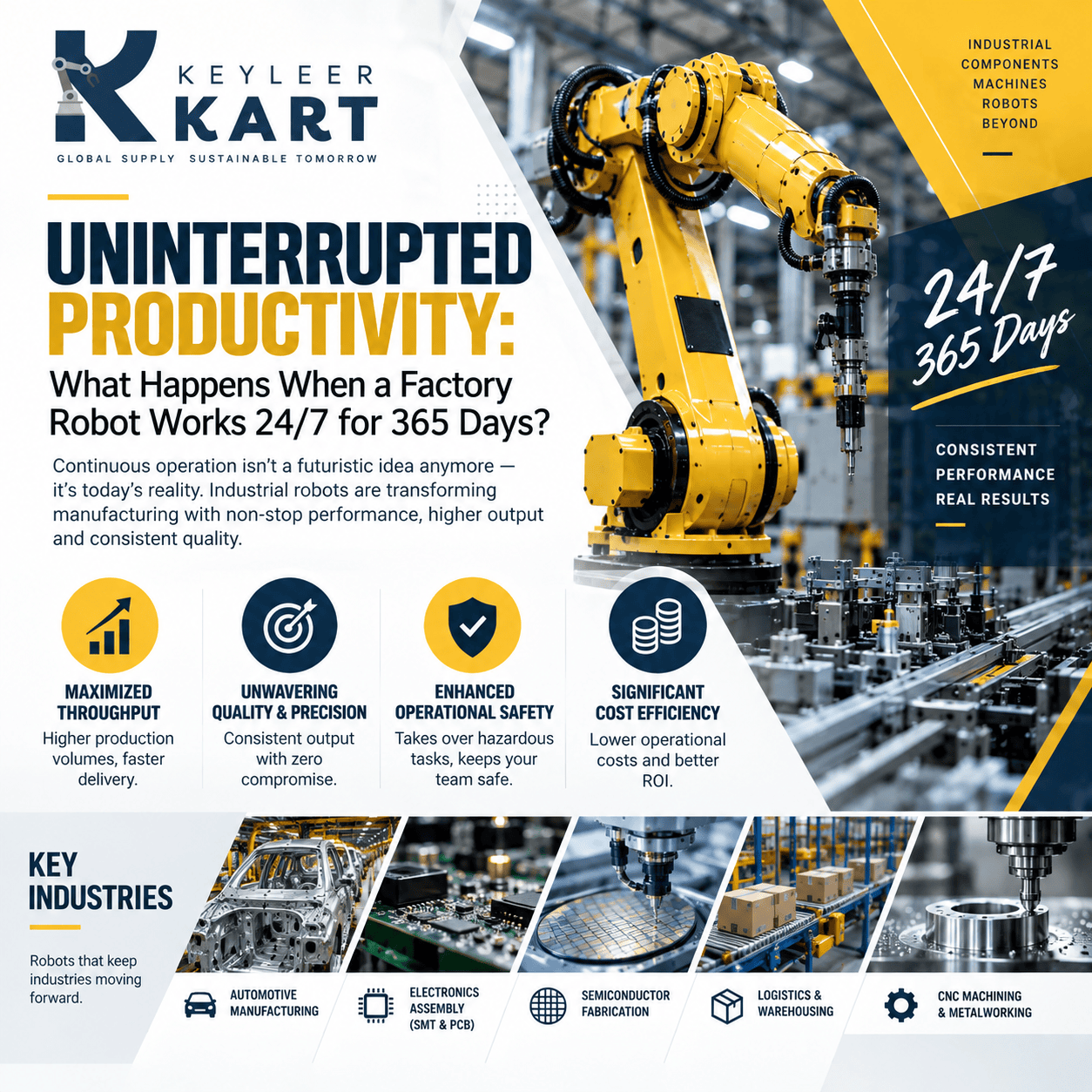
In the relentless pursuit of efficiency and output, modern manufacturing relies heavily on industrial automation. The concept of a factory robot operating non-stop, around the clock, for an entire year is no longer a futuristic vision but a present-day reality driving unprecedented levels of productivity and transforming global supply chains.
Overview
An industrial factory robot is a reprogrammable, multi-functional manipulator designed to move material, parts, tools, or specialized devices through variable programmed motions for the performance of a variety of tasks. These machines are engineered for precision, speed, and endurance, making them ideal candidates for continuous operation.
Robots execute their tasks by following pre-programmed instructions, often integrated with sensors, vision systems, and sophisticated control software that allows them to perform complex operations with consistent accuracy. From picking and placing minuscule electronic components to welding heavy automotive frames, their work is defined by repetitive actions performed with unerring fidelity.
The importance of these robots in continuous operation lies in their ability to eliminate human limitations such as fatigue, breaks, and varying performance levels. They ensure consistent output quality, reduce cycle times, and significantly enhance worker safety by taking over hazardous tasks. They are critical to industries requiring high throughput and precision, commonly found in automotive assembly lines, electronics manufacturing for SMT and PCB assembly, semiconductor fabrication plants, CNC machining facilities, and logistics warehouses for automated material handling.
Key Factors to Consider
1. Wear and Tear & Component Lifespan
Continuous operation subjects mechanical components like bearings, gears, and motors to constant stress. Material fatigue and cumulative wear become critical considerations, necessitating the use of high-grade, durable components and careful design to maximize mean time between failures (MTBF).
2. Preventive Maintenance Schedule
A rigorous and strategically planned preventive maintenance (PM) schedule is paramount. This includes regular inspections, lubrication, part replacements (even before failure), and diagnostics to preempt potential issues, ensuring the robot can sustain its operational uptime without unexpected breakdowns.
3. Software and Control System Reliability
Beyond hardware, the robot's operating software, control algorithms, and communication systems must be exceptionally robust. Continuous data processing, command execution, and integration with other factory systems demand highly reliable software that can withstand prolonged operation without glitches or memory leaks.
4. Environmental Conditions
Ambient factors such as temperature, humidity, dust, and vibrations can significantly impact a robot's performance and longevity during 24/7 operation. Factories must ensure controlled environments or utilize robots specifically rated for harsh conditions to prevent premature component degradation.
5. Energy Consumption and Efficiency
Running a robot for 365 days a year consumes substantial energy. Evaluating the robot's energy efficiency, implementing power-saving modes during idle times, and exploring regenerative braking systems are crucial for managing operational costs and contributing to sustainable manufacturing practices.
Benefits
Maximized Throughput
The ability of robots to work continuously without breaks significantly boosts production volumes. This uninterrupted operation leads to higher throughput and increased capacity, directly impacting a factory's ability to meet market demand and optimize resource utilization.
Unwavering Quality & Precision
Robots perform tasks with consistent, repeatable precision, eliminating human variability and error. This ensures a uniform high-quality output across millions of products, which is particularly critical in industries like semiconductor and electronics manufacturing where tolerances are extremely tight.
Enhanced Operational Safety
By automating dangerous, repetitive, or ergonomically challenging tasks, robots remove human operators from hazardous environments. This drastically reduces workplace accidents and injuries, creating a safer manufacturing floor and improving overall employee well-being.
Significant Cost Efficiency
While initial investment can be substantial, 24/7 robotic operation leads to long-term cost savings through reduced labor expenditure for repetitive tasks, minimized material waste due to precision, and optimized energy usage, ultimately delivering a strong return on investment.
Industrial Applications
Automotive Manufacturing
Electronics Assembly (SMT, PCB)
Semiconductor Fabrication
Logistics and Warehousing
CNC Machining and Metalworking
Buying Guide
When considering industrial robots for 24/7 operation, buyers must thoroughly evaluate machine condition, detailed technical specifications, warranty coverage, and the supplier's reputation for reliability and after-sales support. Crucially, assess the availability of spare parts and ensure seamless compatibility with existing factory automation infrastructure to guarantee long-term operational success.
Maintenance Tips
Maintaining continuous robotic operations requires a proactive approach. Implement a rigorous preventive maintenance schedule, including regular cleaning of components, precise lubrication of moving parts, thorough inspection for wear and tear, and periodic calibration to ensure accuracy. Proper operator training is also vital for early issue detection and basic troubleshooting.
Industry Trends
The landscape of 24/7 robotic operation is continually evolving, driven by Industry 4.0 paradigms. Integration with Artificial Intelligence (AI) and the Internet of Things (IoT) enables smart manufacturing environments where robots can perform self-optimization and communicate autonomously. Predictive maintenance, powered by AI and digital twins, allows for real-time monitoring and proactive issue resolution, minimizing downtime. Furthermore, sustainability is becoming a key driver, pushing for more energy-efficient robotics and automation solutions.
Frequently Asked Questions
Can a factory robot truly run 24/7 for 365 days without ever stopping?
While the goal is continuous operation, a robot's 24/7/365 uptime is typically achieved through meticulous planning, robust design, and a highly disciplined preventive maintenance schedule that incorporates brief, scheduled downtimes for service. True uninterrupted mechanical motion for an entire year is rare without minor pauses, but the operational availability approaches 100% with advanced systems and maintenance.
What is the typical lifespan of an industrial robot under such continuous operation?
The lifespan of an industrial robot under continuous 24/7 operation varies significantly based on its quality, application, and maintenance rigor. However, well-maintained industrial robots from reputable manufacturers can often exceed 10 to 15 years of service, with some models designed for even longer operational lifetimes, especially with component refurbishments.
How do factories manage the substantial energy costs associated with 24/7 robot operations?
Factories employ various strategies to manage energy costs for continuous robot operations. These include investing in energy-efficient robot models, implementing smart energy management systems that optimize power usage, utilizing regenerative braking technologies, and often integrating renewable energy sources. Advanced software also allows for demand-side management, ensuring energy consumption is optimized to production needs.



