
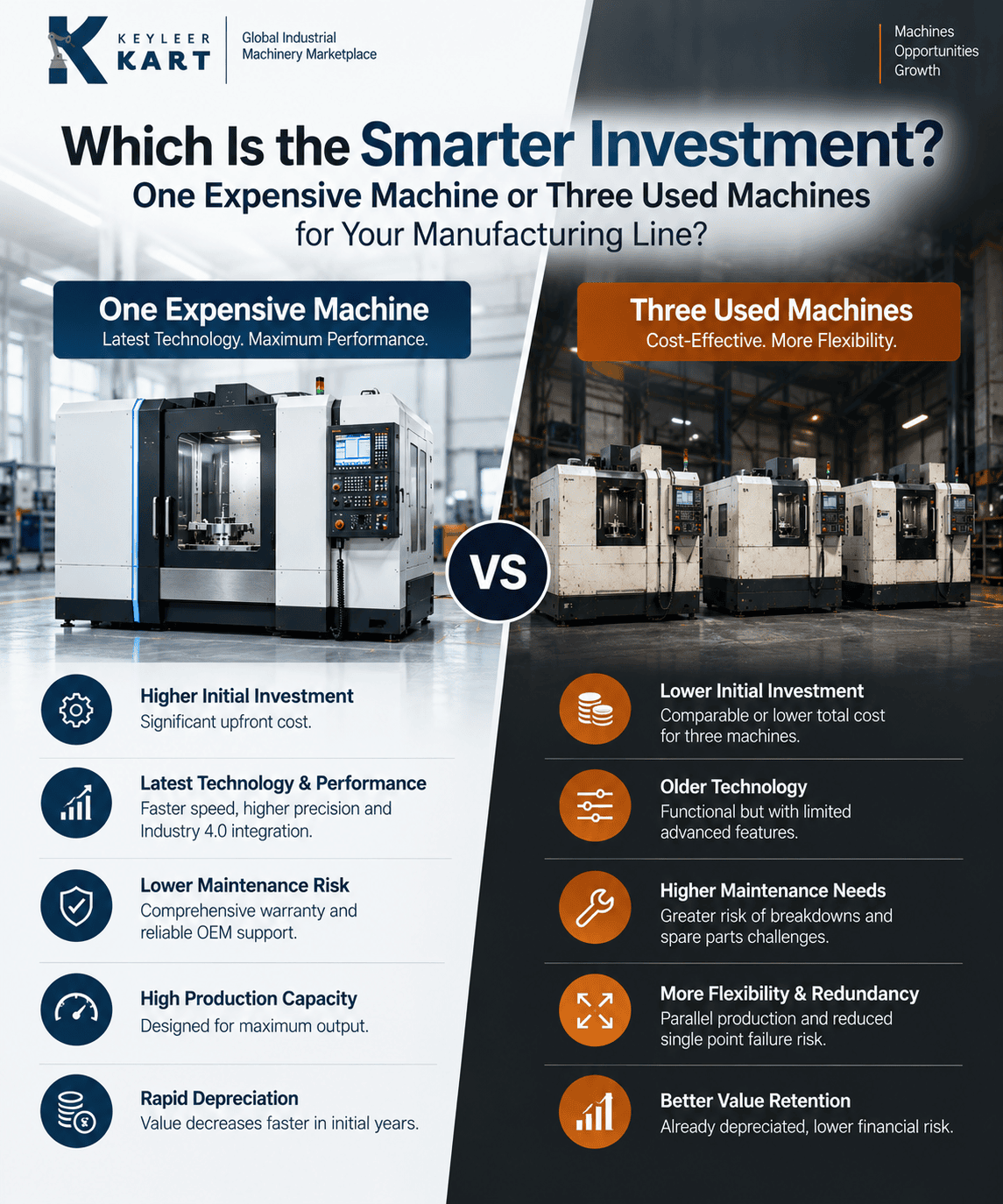
In the rapidly evolving landscape of modern manufacturing and industrial automation, strategic capital expenditure decisions are paramount. Choosing between acquiring a single, state-of-the-art expensive machine and investing in multiple, well-maintained used machines presents a complex dilemma for businesses aiming to optimize production, manage costs, and stay competitive. This article delves into the critical factors influencing this choice, offering insights for SMT, robotics, semiconductor, and CNC operations.
Overview
The core of this discussion revolves around the capital investment strategy for industrial machinery. It's not merely about buying equipment, but about optimizing an entire production ecosystem. An expensive new machine typically offers cutting-edge technology, higher precision, faster speeds, and often integrated Industry 4.0 capabilities. Conversely, three used machines, while potentially older in technology, can offer redundancy, distributed workload, and a significantly lower upfront cost. The decision process involves a deep dive into projected output, maintenance capabilities, operational flexibility, and long-term cost of ownership, crucial for electronics manufacturing, PCB assembly, and complex automation lines where uptime and throughput are critical. This choice is vital for maintaining production efficiency, ensuring scalability, and managing risk across various industrial sectors. This strategic dilemma is commonly faced in high-volume SMT lines, precision CNC machining centers, automated robotics cells, semiconductor fabrication facilities, and electronics assembly plants.
Key Factors to Consider
Initial Capital Investment vs. Budget Allocation
Evaluating the upfront cost is fundamental. A single new machine demands a significant immediate outlay, while three used machines can be acquired for a comparable or lower total sum, allowing for more flexible budget allocation across different operational needs or even a staged deployment.
Technological Advancement and Performance
A new, expensive machine typically incorporates the latest advancements in speed, precision, automation, and connectivity (Industry 4.0), leading to superior performance and higher quality output. Used machines, while functional, may offer older technology, potentially limiting peak efficiency, integration capabilities, and future upgrade pathways.
Maintenance Requirements and Downtime Risk
New machines often come with comprehensive warranties, lower immediate maintenance needs, and readily available manufacturer support and spare parts. Used machines, despite thorough inspections, carry higher risks of unforeseen breakdowns, potentially longer lead times for specialized spare parts, and increased maintenance costs, which can impact overall equipment effectiveness (OEE).
Production Flexibility and Scalability
Investing in multiple used machines can provide greater operational flexibility, allowing for parallel processing, redundancy, or dedicated setups for different product lines. This approach offers a degree of scalability, enabling easier capacity adjustments. A single expensive machine might offer high capacity, but scaling requires further substantial investment.
Long-Term Cost of Ownership and Depreciation
Beyond the initial price, consider the total cost of ownership (TCO) including energy consumption, maintenance, spare parts, and eventual resale value. New machines depreciate rapidly but can offer years of reliable, efficient operation. Used machines have already depreciated, potentially offering better value retention, but may incur higher operational costs over time.
Benefits
Optimized Capital Expenditure
Strategically choosing between new and used equipment allows manufacturers to align investments with budget constraints and immediate operational needs, ensuring capital is deployed efficiently to maximize return on investment without overextending financial resources.
Enhanced Production Flexibility
Acquiring multiple used machines can provide greater adaptability, enabling simultaneous production of diverse products, dedicated lines for specific processes, or easier retooling for new demands, leading to more agile manufacturing operations.
Reduced Risk of Single Point Failure
With three used machines, the failure of one unit does not halt the entire production line, as operations can be shifted to the remaining machines. This redundancy significantly minimizes downtime and safeguards against critical production bottlenecks.
Faster Deployment and Quicker ROI
Used machines are often available immediately, reducing lead times associated with new equipment orders and factory installations. This faster deployment can lead to quicker commencement of production, generating revenue and achieving a faster return on investment.
Industrial Applications
SMT (Surface Mount Technology) Assembly Lines
CNC Machining Centers
Semiconductor Wafer Fabrication and Packaging
Robotics and Automation Cells
Electronics Component Manufacturing
Buying Guide
Before making a purchase decision, buyers must meticulously evaluate machine condition through expert inspection, verify specifications against production requirements, and understand warranty terms. Supplier reputation is crucial, as is the availability and cost of spare parts and consumables. Furthermore, ensure seamless compatibility with existing infrastructure, software, and production processes to avoid unforeseen integration challenges.
Maintenance Tips
Implementing a robust preventive maintenance schedule is paramount, including regular cleaning, precise lubrication of moving parts, routine inspection for wear and tear, and periodic calibration of critical components. Investing in comprehensive operator training ensures correct usage and early identification of potential issues, prolonging equipment lifespan and maintaining optimal performance.
Industry Trends
The decision-making process is increasingly influenced by Industry 4.0 imperatives, leveraging AI, IoT, and smart manufacturing principles. Predictive maintenance, enabled by connected sensors, helps anticipate failures in both new and used machines. The integration of digital twins offers virtual commissioning and optimization, while automation remains a core driver for efficiency and sustainability, impacting the long-term value proposition of any equipment investment.



