
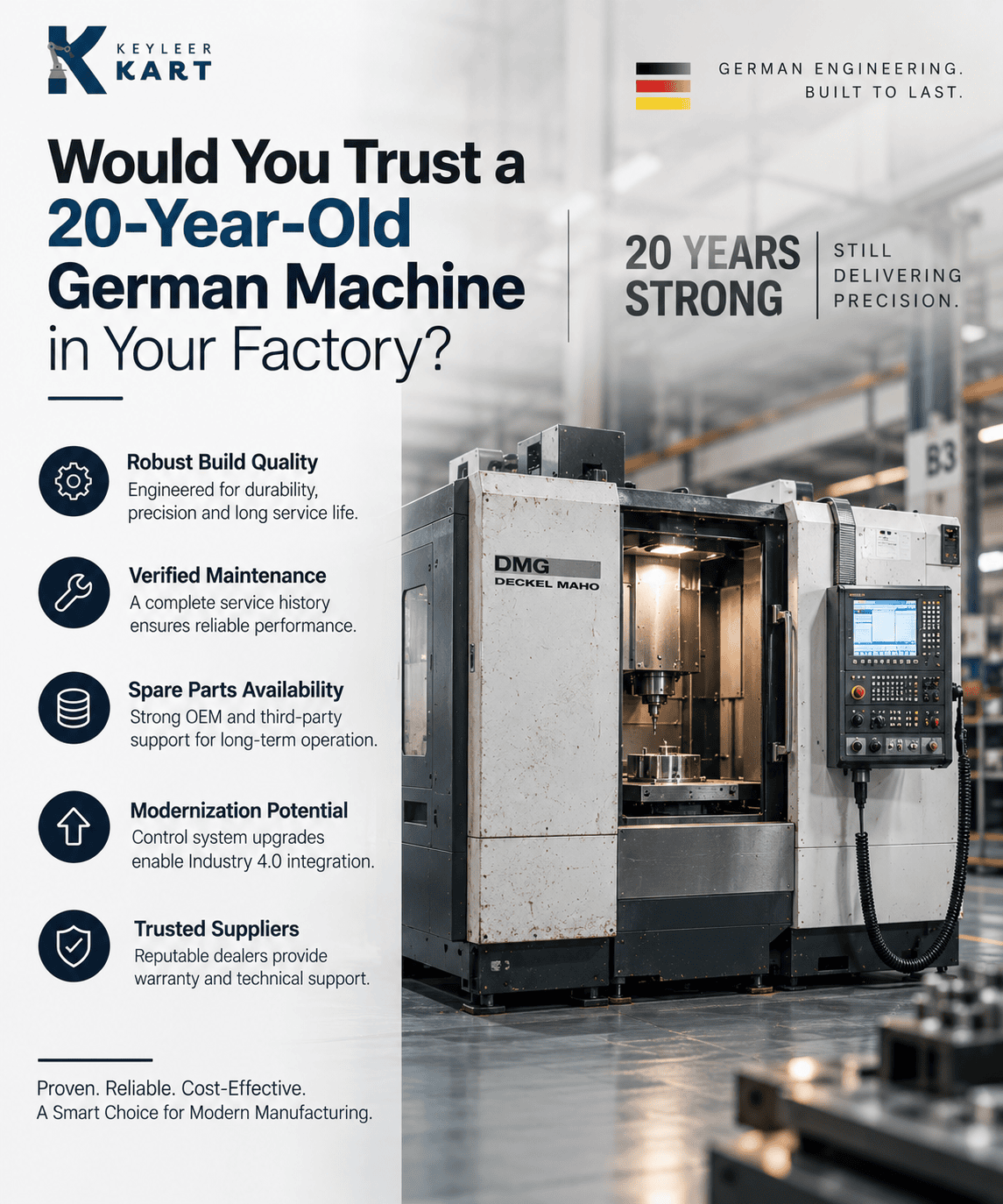
In the fast-paced world of industrial automation and advanced manufacturing, the question of integrating older, yet robust, machinery into modern production lines is increasingly relevant. Factory managers and production engineers often face a dilemma: invest heavily in brand-new equipment or leverage the proven durability of well-engineered, older machines. This article delves into whether a two-decade-old German machine, renowned for its precision and longevity, can still be a valuable asset in your factory today.
Overview
A 20-year-old German machine typically refers to high-quality industrial equipment such as CNC machining centers, SMT placement machines, injection molding systems, semiconductor fabrication tools, or robotics platforms designed and manufactured in Germany. These machines are engineered with exceptional build quality, precise components, and robust mechanical structures, often exceeding the lifespan expectations of counterparts from other regions. Their operation relies on integrated control systems, mechanical precision, and often hydraulic or pneumatic actuation, enabling complex manufacturing processes. The importance of these machines stems from their potential for cost-effective operation, high-tolerance production, and extended service life, making them vital in industries where precision, reliability, and long-term asset value are paramount. They are commonly used across diverse sectors including automotive, aerospace, electronics manufacturing, medical device production, and general precision engineering.
Key Factors to Consider
1. Inherent Build Quality and Engineering
German engineering is synonymous with durability, precision, and meticulous craftsmanship. Machines from this origin often feature heavy-duty frames, high-grade materials, and robust mechanical designs built to withstand continuous, demanding operations over decades, making their underlying structure inherently reliable even after 20 years.
2. Comprehensive Maintenance History
A detailed service log is crucial. Machines with a documented history of regular preventive maintenance, professional servicing, and timely part replacements indicate a well-cared-for asset. This history provides insight into potential wear points and confirms the machine's operational integrity.
3. Availability of Spare Parts and Service Expertise
While older, the strong OEM and third-party support networks for German machinery often ensure the continued availability of critical spare parts and specialized technical expertise. This significantly mitigates the risk of extended downtime due to component failure or repair challenges.
4. Potential for Control System Modernization
Many older German machines feature robust mechanical foundations that can be enhanced with modern control systems (retrofit). Upgrading the HMI, PLC, or CNC controllers can integrate the machine into Industry 4.0 environments, improve programmability, enhance connectivity, and boost operational efficiency without replacing the entire unit.
5. Supplier Reputation and Post-Sale Support
Purchasing from a reputable supplier specializing in refurbished or pre-owned industrial machinery, especially those with expertise in German brands, offers a significant advantage. Such suppliers often provide warranties, installation support, and ongoing technical assistance, critical for long-term operational success.
Benefits
Cost-Efficiency
Acquiring a high-quality 20-year-old German machine can offer substantial cost savings compared to purchasing new equipment. This reduced initial investment allows factories to allocate capital to other critical areas while still benefiting from premium manufacturing capabilities.
Proven Reliability and Durability
The fact that a machine has successfully operated for two decades is testament to its inherent reliability and robust construction. German engineering ensures components are built to last, offering consistent performance and minimal unexpected downtime when properly maintained.
Sustainable Manufacturing Choice
Utilizing existing machinery extends its lifecycle, reduces waste, and minimizes the environmental impact associated with manufacturing and transporting new equipment. It's a responsible choice that aligns with modern sustainability goals in industrial operations.
Enhanced Precision and Quality
Many older German machines were engineered to extremely tight tolerances, often exceeding those of newer, mass-produced counterparts. This translates into continued high-precision output, critical for applications in electronics, aerospace, and semiconductor manufacturing, ensuring product quality remains uncompromised.
Industrial Applications
Automotive Component Manufacturing
Aerospace Precision Machining
Electronics PCB Assembly (SMT)
Semiconductor Wafer Processing
General Precision Engineering and Tool & Die Making
Buying Guide
When considering a 20-year-old German machine, buyers must meticulously evaluate its current machine condition through thorough inspections, verify its specifications against current production needs, inquire about any available warranty from the supplier, and assess the supplier's reputation for refurbished equipment. Crucially, research the availability of spare parts and ensure compatibility with existing factory infrastructure and software systems before finalizing the purchase.
Maintenance Tips
Maximizing the lifespan and performance of an older German machine hinges on stringent maintenance practices. Implement a robust preventive maintenance schedule including regular cleaning of all components, meticulous lubrication of moving parts, frequent inspections for wear and tear, and periodic calibration to maintain accuracy. Furthermore, investing in comprehensive operator training ensures the machine is used correctly and potential issues are identified early.
Industry Trends
Integrating a 20-year-old German machine, especially one with retrofitted controls, aligns well with current Industry 4.0 trends. With proper upgrades, these machines can feed data for IoT analytics, support smart manufacturing initiatives, and enable predictive maintenance strategies. Their inherent durability also supports sustainability goals by extending equipment lifecycles, and with digital twin capabilities, their performance can be modeled and optimized, enhancing overall factory automation and efficiency.
Frequently Asked Questions
Can a 20-year-old German machine be integrated into a modern Industry 4.0 setup?
Absolutely. While the core mechanics remain robust, modernizing the control systems, such as replacing older PLCs or HMI panels with contemporary, networked versions, can enable seamless integration into Industry 4.0 ecosystems. This allows for data collection, remote monitoring, and connectivity with other smart factory solutions.
What are the primary risks associated with purchasing older industrial equipment?
The main risks include the potential for unforeseen wear and tear, difficulty in sourcing obsolete spare parts, and the absence of manufacturer warranty. However, these risks can be significantly mitigated by thorough pre-purchase inspections, verifying comprehensive maintenance records, and partnering with specialized, reputable suppliers.
How does an older German machine compare in precision to newer models?
Often, older German machines were built with an emphasis on mechanical precision and robustness that is sometimes scaled back in newer, cost-optimized designs. While lacking the latest software features, their fundamental mechanical accuracy can frequently rival or even surpass that of many contemporary models, especially in core machining and assembly functions.



