
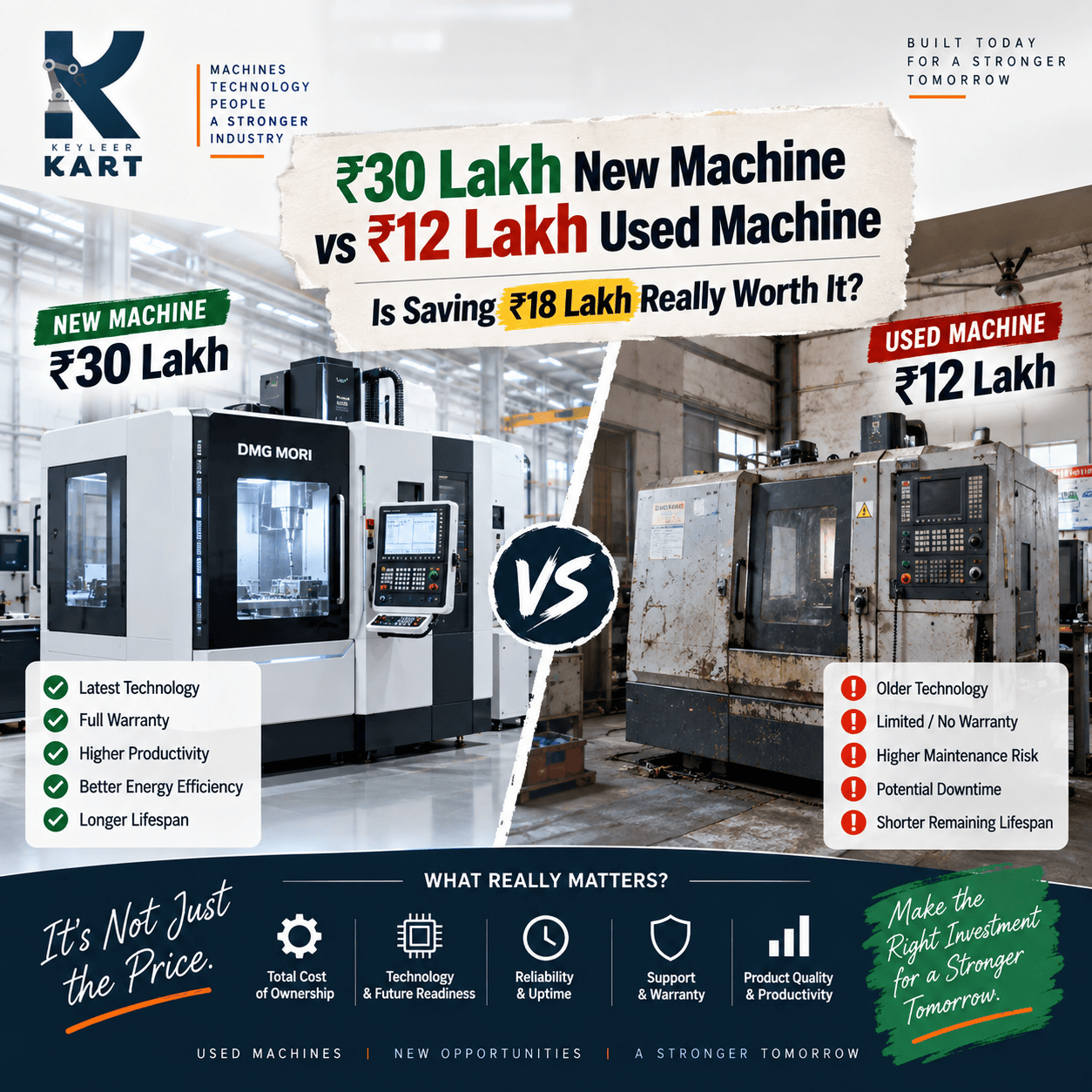
In the rapidly evolving landscape of modern manufacturing and industrial automation, the strategic acquisition of machinery is paramount. Businesses often face a critical dilemma: invest in a cutting-edge new machine or opt for a more budget-friendly used alternative. This decision, particularly when comparing a ₹30 Lakh new machine to a ₹12 Lakh used machine, has profound implications for operational efficiency, long-term profitability, and competitive advantage in a demanding market.
Overview
The industrial machine at the heart of this discussion represents a broad category of precision manufacturing equipment, such as an advanced CNC machining center, a high-speed SMT pick-and-place machine, or a sophisticated robotic assembly cell. These machines are engineered to execute complex manufacturing processes with exceptional accuracy, repeatability, and speed. They typically integrate mechanical components, electronic controls, and sophisticated software, often leveraging CAD/CAM data for automated operation. Their importance lies in their capacity to significantly boost productivity, ensure consistent product quality, reduce manual labor, and enable the mass production of intricate components. Such machinery is indispensable across various sectors, including electronics manufacturing, automotive component production, medical device assembly, aerospace part fabrication, and general precision machining workshops, forming the backbone of modern automated factories.
Key Factors to Consider
Initial Investment vs. Total Cost of Ownership (TCO)
While the ₹18 Lakh immediate saving on a used machine is appealing, it's crucial to evaluate the Total Cost of Ownership. A lower initial price can be offset by higher maintenance costs, increased downtime, greater energy consumption, and the potential need for frequent spare parts or upgrades in a used machine, eroding the perceived savings over time.
Technological Advancement and Obsolescence
A new ₹30 Lakh machine often incorporates the latest advancements in automation, software integration, energy efficiency, and precision capabilities. A ₹12 Lakh used machine, while functional, might utilize older technology, potentially lacking modern connectivity (Industry 4.0 readiness), advanced safety features, or the processing power required for future demands, leading to early obsolescence.
Machine Condition and Expected Lifespan
The condition of a used machine is a significant variable. While a well-maintained used unit can offer good value, it inherently comes with accumulated wear and tear, potentially shortening its remaining operational lifespan. A new machine guarantees peak performance from day one, backed by the manufacturer's quality assurance, promising a longer, more reliable service life without immediate major repairs.
Warranty, Support, and Service Agreements
New machines invariably come with a comprehensive manufacturer’s warranty, providing peace of mind against defects and offering direct access to expert technical support and genuine spare parts. Used machines typically have limited or no warranty, placing the onus of fault diagnosis, repair costs, and sourcing specialized parts entirely on the buyer, which can be a substantial risk.
Productivity, Accuracy, and Quality Output
The core purpose of industrial machinery is high-quality output. A new machine, with its pristine components and calibrated systems, can consistently deliver higher accuracy, tighter tolerances, and superior product quality, directly impacting customer satisfaction and reducing scrap rates. A used machine, depending on its history, might struggle to meet the same exacting standards, potentially affecting product consistency.
Benefits
Optimized Long-Term ROI
Investing in a new machine, despite the higher initial cost, often yields a superior long-term Return on Investment. Enhanced reliability, lower maintenance expenses, reduced downtime, and the ability to produce higher quality products more efficiently contribute significantly to profitability over its extended operational lifespan.
Enhanced Reliability and Performance
New industrial equipment offers unparalleled reliability and consistent peak performance. Factory-fresh components, precise calibration, and cutting-edge design minimize the risk of unexpected breakdowns, ensuring uninterrupted production schedules and consistent output quality critical for demanding manufacturing environments.
Access to Cutting-Edge Technology
A new machine provides immediate access to the latest advancements in automation, software, and materials processing. This enables businesses to adopt Industry 4.0 strategies, integrate with smart factory ecosystems, improve energy efficiency, and leverage new functionalities that can significantly enhance competitive advantage and future-proof operations.
Comprehensive Support and Warranty
The peace of mind that comes with a full manufacturer’s warranty and direct access to professional technical support for a new machine is invaluable. This mitigates risks associated with unexpected faults, simplifies maintenance, and ensures that expert assistance and genuine spare parts are readily available, minimizing downtime and operational headaches.
Industrial Applications
Electronics Manufacturing (PCB Assembly, SMT lines)
Automotive Component Production (Engine parts, chassis components)
Medical Device Manufacturing (Precision implants, surgical instruments)
Aerospace & Defense (Turbine blades, structural components)
General Precision Machining (Tool & Die, bespoke parts)
Buying Guide
Before committing to either a new or used industrial machine, buyers must conduct a thorough evaluation. Key considerations include the machine's current condition (for used), its detailed specifications against production needs, the available warranty and post-sale support, the supplier's reputation and track record, the accessibility and cost of spare parts, and seamless compatibility with existing factory infrastructure and software systems. A comprehensive due diligence process mitigates risks and ensures alignment with long-term strategic goals.
Maintenance Tips
To maximize the lifespan and performance of any industrial machine, adhere to a rigorous maintenance regimen. Implement a proactive preventive maintenance schedule, including regular cleaning to prevent accumulation of debris, appropriate lubrication of moving parts, routine inspections for wear and tear, and periodic calibration to maintain accuracy. Furthermore, investing in thorough operator training ensures correct usage and early detection of potential issues, significantly reducing unexpected downtime.
Industry Trends
The manufacturing sector is rapidly evolving with Industry 4.0 at its core. New machines are increasingly incorporating AI-driven analytics, IoT connectivity for real-time data collection, and robust automation capabilities to facilitate smart manufacturing. Trends like predictive maintenance, powered by sensor data and digital twins, are becoming standard, enabling proactive issue resolution. Sustainability is also a growing focus, with newer equipment designed for energy efficiency and reduced environmental impact, aligning with global green initiatives and enhancing operational competitiveness.
Frequently Asked Questions
Is a used machine always a better investment due to lower cost?
Not necessarily. While the initial cash outlay for a used machine is significantly lower, potential hidden costs such as increased maintenance, higher energy consumption, frequent repairs, and reduced lifespan can quickly diminish the perceived savings. A comprehensive Total Cost of Ownership analysis over the machine's expected operational life is crucial to determine true value.
How does a new machine contribute to long-term operational efficiency?
A new machine directly enhances long-term operational efficiency through several avenues: superior reliability means less downtime and consistent production; cutting-edge technology allows for higher precision and faster cycles; reduced energy consumption lowers operating expenses; and manufacturer warranties coupled with readily available support minimize repair costs and improve overall uptime, securing greater profitability.
What role does supplier reputation play in this decision?
Supplier reputation is paramount, especially when considering used equipment. A reputable supplier will offer transparent machine history, professional refurbishing services, and potentially some form of limited warranty or post-sale support. For new machines, a strong supplier ensures reliable delivery, excellent technical support, access to genuine spare parts, and long-term partnership, all critical for sustained operational success.



